Most Indian farmers believe soil health can only be understood through a laboratory report. Numbers for nitrogen, phosphorus, potassium, pH. When those numbers look low, more fertilizer is added. When crops still struggle, confusion grows.
On real farms, soil health is rarely first revealed on paper. It shows itself in the field, quietly, through texture, smell, moisture behaviour, roots, and life in the soil.
At Terragaon Farms, we rely far more on field observation than on lab reports to judge whether soil is improving or declining. Lab tests have their place, but for Indian farmers working on small land with tight budgets, the field gives earlier and more reliable signals.
This article explains how Indian farmers can read soil health without a lab test, using practical indicators that reflect real biological function, not just chemical availability.
Why lab tests alone often mislead small farmers
Soil tests measure nutrients present at a specific moment. They do not measure how well soil functions as a living system.
A field can show adequate NPK on paper and still struggle with poor root growth, water stress, and pest pressure. Another field may show low numbers yet grow resilient crops because biology and structure are intact.
Lab tests rarely capture microbial activity, aggregation, root pathways, or moisture behaviour. These factors decide whether nutrients move to plants naturally or remain locked.
For small farmers, relying only on lab numbers often leads to over correction and rising costs.
The first indicator: how soil behaves after rain
One of the simplest and most powerful indicators of soil health appears after rainfall.
Healthy soil absorbs water. Unhealthy soil sheds it.
If rainwater enters the soil gradually, leaving the surface soft and crumbly, structure and aggregation are improving. If water pools, runs off, or creates a hard crust after drying, soil biology and organic matter are weak.
In red lateritic soils common in eastern India, surface sealing after rain is an early warning sign of declining organic matter. When mulching and reduced disturbance are practiced, this behaviour changes visibly within seasons.
Soil smell reveals biological activity
Soil smell is not subjective. It is biological.
Healthy soil smells earthy and slightly sweet after rain due to compounds produced by active microorganisms. Lifeless soil smells neutral, sour, or chemical.
Farmers who regularly work their fields notice this change before crops respond. When soil begins to smell alive again, biology is returning even if yields have not changed yet.
This is one of the earliest signs of recovery after chemical pressure is reduced.
Texture and aggregation tell a deeper story
Pick up a handful of moist soil and press it lightly.
Healthy soil breaks into small aggregates. It does not form hard clods or powdery dust. Aggregation allows air, water, and roots to move freely.
Soil that compacts easily or turns rock hard when dry lacks biological glue produced by microbes and roots.
This indicator matters more than nutrient levels because poor structure blocks nutrient uptake even when nutrients are present.
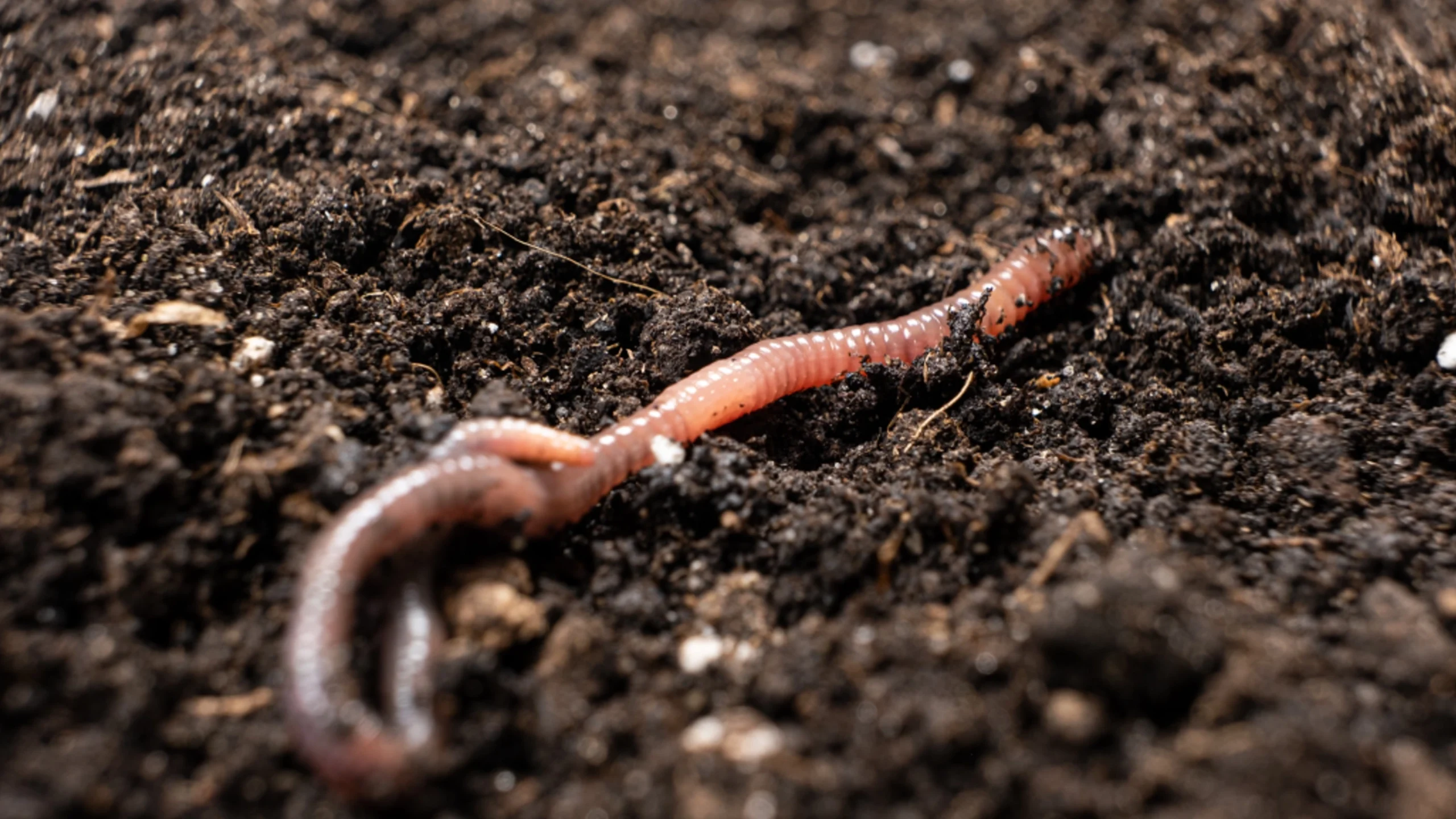
Earthworms are not decoration, they are data
Earthworms are not a symbol. They are a measurement.
Their presence indicates moisture stability, organic matter, and low toxicity. Their absence signals heat stress, disturbance, or chemical pressure.
Earthworms do not appear instantly. They return when conditions become favourable. Their gradual increase shows that soil has crossed a biological threshold.
Counting worms per square foot is not necessary. Simply noticing whether they exist is enough for practical assessment.
Root behavior reveals hidden soil conditions
Pull out a plant carefully and observe the roots.
Healthy roots are white or light colored, spread freely, and penetrate deeper layers. Stunted, brown, or shallow roots indicate compaction, poor aeration, or microbial imbalance.
Roots respond to soil conditions faster than leaves respond to nutrient sprays. They reveal problems before symptoms appear above ground.
Farmers who observe roots regularly understand soil health far better than those who rely on surface growth alone.
Weed diversity indicates balance, not failure
Many farmers see weeds only as enemies. In natural systems, weeds also indicate soil conditions.
Fields dominated by one aggressive weed often signal imbalance or disturbance. Fields with diverse weeds usually reflect improving soil health.
As soil recovers, weed species often change. Hard, sharp weeds give way to softer ground covers. This shift happens naturally when soil structure and biology improve.
Weed diversity is a sign of transition, not neglect.
Soil moisture retention between irrigations
Healthy soil holds moisture longer without becoming waterlogged.
If irrigation frequency reduces naturally while crops remain healthy, soil structure and organic matter are improving. If soil dries within hours, biology and cover are insufficient.
Mulching plays a major role here, but only works when soil life is present to process organic matter.
Moisture behavior is one of the clearest functional indicators of soil health.
How farmers can track soil health without numbers
Farmers do not need complex tools. A simple notebook works.
Observe after rain. Smell soil monthly. Check roots during thinning. Note weed changes. Track irrigation intervals.
These observations reveal trends over time, which matter more than one time measurements.
Soil health improves gradually. Field indicators show direction earlier than yield data.
When lab tests still matter
This article does not reject lab tests.
Lab tests help diagnose severe deficiencies, salinity, or pH extremes. They support decision making, not replace observation.
The mistake is using lab numbers without understanding field function. Soil must work biologically before numbers become meaningful.
Common mistakes when reading soil health
Judging soil only by color leads to error. Dark soil is not always healthy. Light soil is not always poor.
Expecting instant change discourages farmers unnecessarily. Biology recovers before yield responds.
Overreacting to one indicator instead of observing patterns creates confusion.
Soil health is a trend, not a snapshot.
Final thoughts
How to read soil health without a lab test is not a shortcut. It is a skill.
Indian farmers historically relied on observation because soil function was visible and responsive. Modern farming weakened that connection, but it can be rebuilt.
At Terragaon Farms, we learned to trust what soil shows us before trusting what reports tell us. When soil began absorbing water, smelling alive, holding structure, and supporting roots, recovery was already underway even if numbers lagged behind.
For Indian farmers, soil health becomes clearer when fields are observed patiently and consistently. The soil speaks. The challenge is slowing down enough to listen.

Krittika Das is a field practitioner and primary author at Terragaon Farms in Birbhum, West Bengal. Her writing is grounded in daily farm work, long-term soil observation, and small-land realities of eastern India. She focuses on natural farming, soil ecology, ethical dairy, and low-input systems, translating field experience into clear, practical knowledge for farmers and conscious food consumers.