Mulching is often presented as a simple solution. Cover the soil and everything improves. In reality, especially on red lateritic soil, the effects of mulching are gradual, uneven, and deeply tied to labor and timing. This trial documents what actually changed on our farm after one full cropping season of continuous mulching, and what did not.
At Terragaon Farms in Birbhum, West Bengal, red lateritic soil dominates. It is porous, low in organic matter, quick to dry, and prone to surface hardening after rain. Mulching is often recommended for such soils, but few accounts explain what farmers should realistically expect within a single season.
This article records our observations on moisture behavior, soil structure, weed pressure, and labor, without exaggeration or ideology.
In short:
After one full season, mulching improved moisture stability and surface softness, altered weed behavior, and reduced peak labor stress, but it did not transform soil structure completely or eliminate weeds.
Trial context and setup
This was not a demonstration plot. It was part of our working farm.
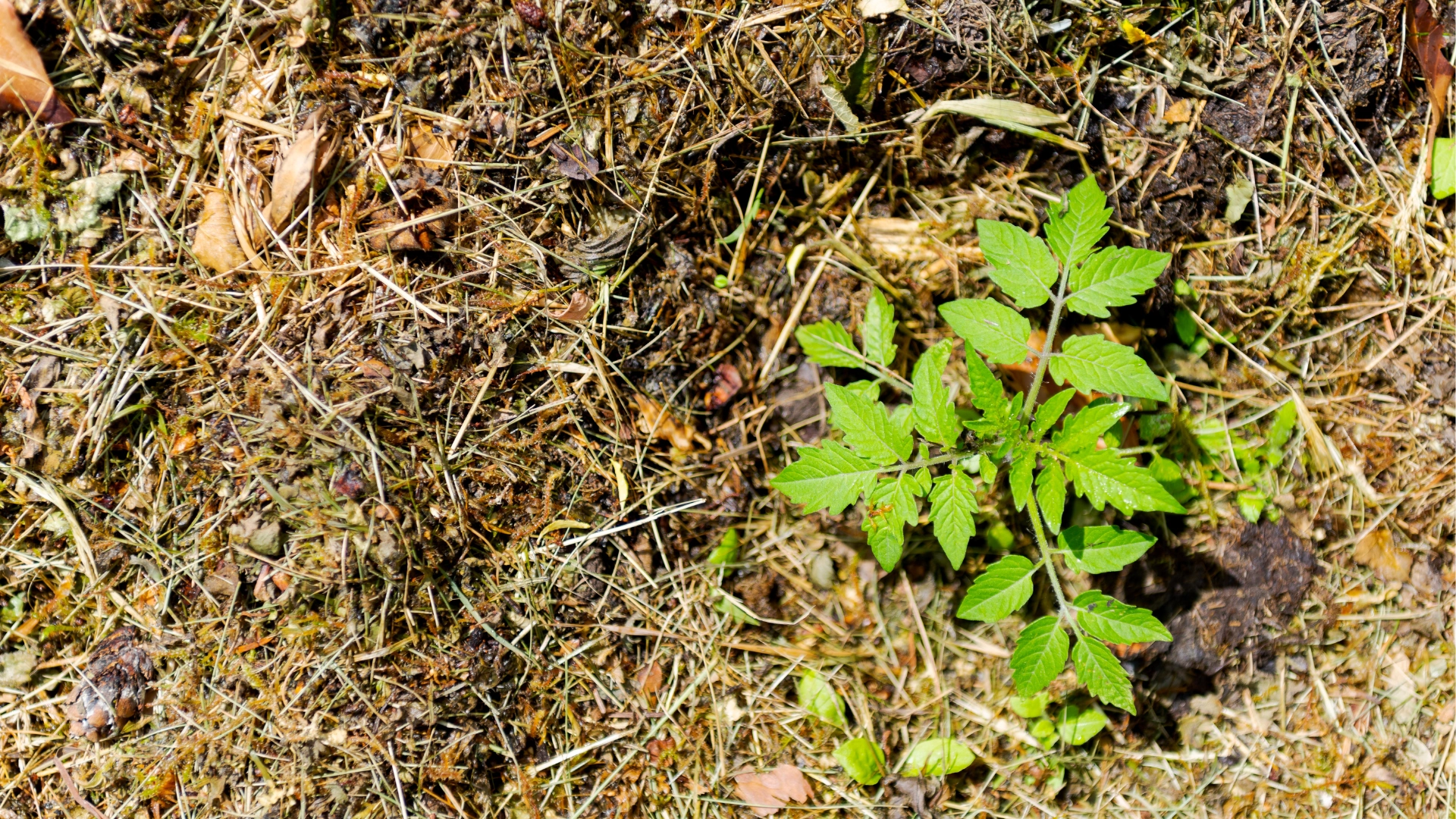
We applied dry organic mulch consisting mainly of crop residues, fallen leaves, and locally available biomass. Mulch was applied immediately after bed preparation and maintained throughout the season, with reapplication where breakdown occurred. Adjacent beds with similar soil history were kept unmulched for comparison.
The trial ran through one complete season, covering pre monsoon heat, active rainfall, and late season drying.
What changed in soil moisture behavior
The most immediate and consistent change was in moisture stability.
Mulched beds retained moisture longer between irrigation and rainfall events. During hot afternoons, the soil under mulch remained visibly darker and cooler compared to bare soil. After rainfall, water infiltration improved, with less surface runoff and reduced crust formation.
This did not eliminate irrigation needs, but it reduced urgency. The soil dried more slowly and predictably. For red lateritic soil, this predictability itself was a significant improvement.
How soil structure responded within one season
Structure change was present but limited.
The top few centimeters of soil under mulch became softer and easier to work. Surface sealing after rain reduced noticeably. However, deeper layers showed only early signs of aggregation. The soil did not suddenly become friable or crumbly throughout the profile.
This aligns with biological reality. Structural improvement requires repeated cycles of root growth, organic matter addition, and reduced disturbance. One season begins the process. It does not complete it.
Weed pressure did not disappear, but it changed
Mulching did not eliminate weeds.
What changed was which weeds appeared and how aggressively. Light dependent weeds reduced significantly. In their place, fewer but more persistent weeds emerged through mulch gaps.
Weeding effort shifted from frequent light weeding to occasional targeted removal. The total number of weeding events reduced, but attention was still required. Expecting weed free beds would have been unrealistic.
This change in weed behavior made management calmer, not effortless.
Labor patterns shifted more than total labor
Total labor over the season did not reduce dramatically.
What changed was timing and intensity. Mulching required concentrated labor early in the season for collection and application. In return, labor demand during peak heat reduced. Weeding became less urgent. Irrigation scheduling became less stressful.
For small farms, this redistribution of labor mattered more than total hours. Work became more predictable and less reactive.
What did not change within one season
Some expectations did not materialize.
Soil organic matter did not increase visibly across the profile. Earthworm activity increased slightly near the surface but did not explode. Crop yield differences were present but not dramatic enough to be treated as conclusions.
Mulching showed system benefits, not miracles.
Interaction with rainfall and heat
Mulching proved most valuable during extremes.
During heavy rain, it reduced surface splash and crusting. During dry spells, it slowed moisture loss and protected surface biology. During peak heat, soil temperature under mulch was consistently lower.
These protective effects matter more in lateritic soils that otherwise swing rapidly between wet and dry stress.
Lessons for small farmers on red soil
This trial reinforced several practical lessons.
Mulching works best when applied early and maintained. Thin or inconsistent mulch delivers limited benefit. Expect management, not abandonment. Benefits appear first in moisture behavior and labor calmness, not instant yield jumps.
Most importantly, mulching should be viewed as a process starter, not a finished solution.
How this trial influenced our system
After this season, mulching became non negotiable for certain beds, especially during summer and monsoon transitions. We did not expand it blindly everywhere. We focused on areas where moisture stress and labor pressure were highest.
This selective expansion kept the system manageable.
Final thoughts
Mulching on red lateritic soil is not dramatic. It is stabilizing.
After one full season, the soil did not transform, but it behaved differently. Moisture held longer. Surface stress reduced. Labor became steadier. These changes are subtle but cumulative.
For small farms, stability is often more valuable than visible improvement. Mulching delivered that stability without demanding unrealistic expectations.

Krittika Das is a field practitioner and primary author at Terragaon Farms in Birbhum, West Bengal. Her writing is grounded in daily farm work, long-term soil observation, and small-land realities of eastern India. She focuses on natural farming, soil ecology, ethical dairy, and low-input systems, translating field experience into clear, practical knowledge for farmers and conscious food consumers.