
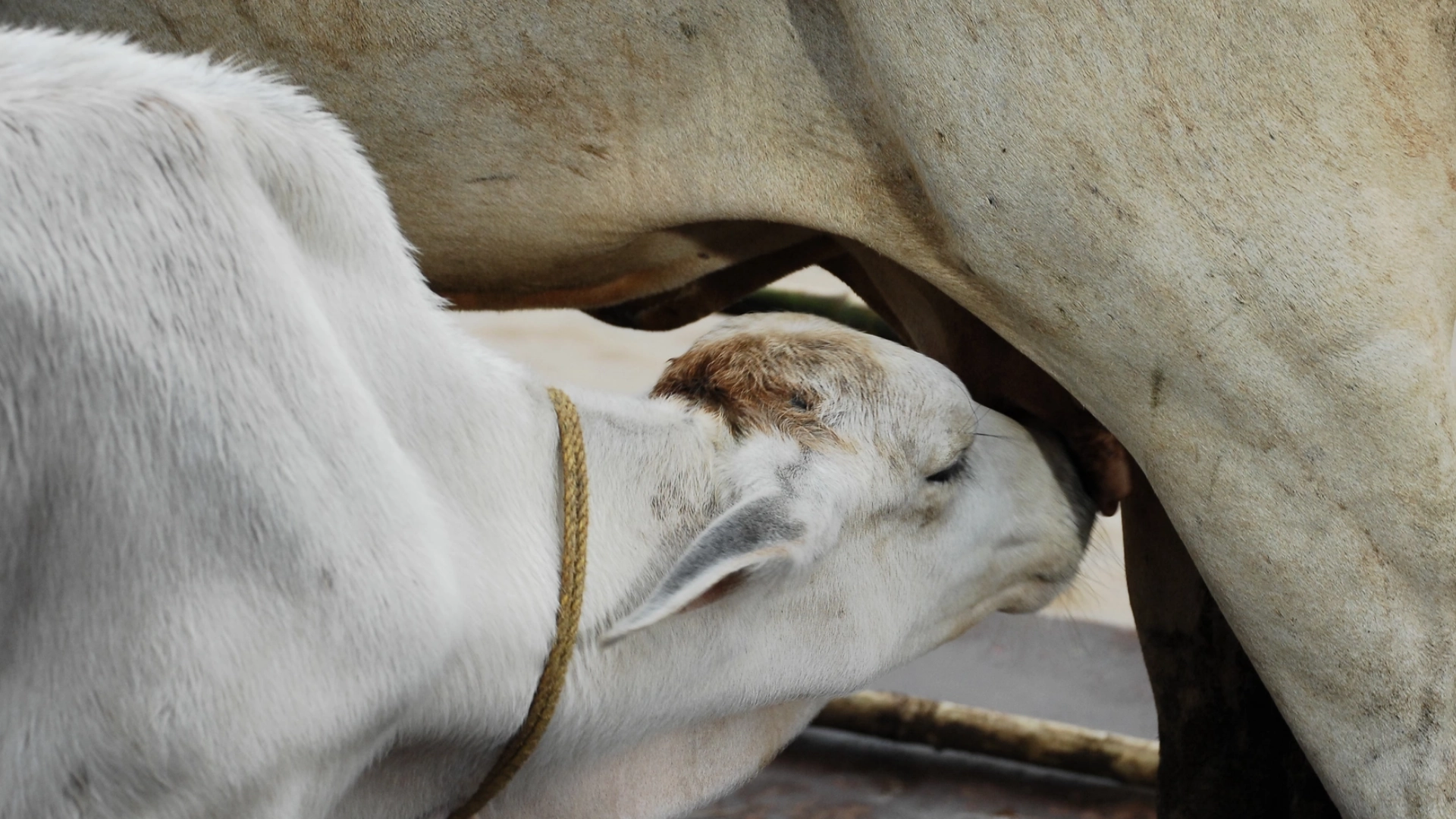
Successful calf rearing on small natural farms depends on early immunity transfer, controlled milk access, clean housing, gradual rumen development, and minimal stress, not on expensive feeds or medicines. At Terragaon Farms in Birbhum, West Bengal, calves raised under natural, low-intervention systems showed stronger immunity, better growth consistency, and lower mortality than calves raised with aggressive feeding or premature separation. Calf rearing is not a side activity. It determines the future productivity and survival of the entire dairy system.
Why Calf Rearing Is the Weakest Link on Small Farms
Most dairy failures begin silently at the calf stage.
Small farmers often focus attention on the milking cow while assuming calves will “manage on their own.” This assumption leads to poor immunity, stunted growth, digestive disorders, and high mortality. These losses are rarely recorded as system failure, but they directly reduce herd quality and long-term profitability.
Calf rearing is not about speed. It is about biological sequencing.
The Science Behind Calf Survival and Growth
A calf is born with an immature immune system. It relies entirely on passive immunity from colostrum during the first few hours of life. If this transfer fails, no amount of later feeding or medication can fully correct it.
Calf digestion is also undeveloped at birth. The rumen matures gradually through microbial colonisation triggered by fibre intake, not milk volume.
Early mistakes permanently weaken the animal.
Colostrum Management Is Non-Negotiable
The first six hours after birth decide calf survival.
Calves must receive adequate colostrum from the mother as early as possible. Delayed or diluted colostrum reduces antibody absorption sharply. On natural farms, allowing the calf to suckle directly ensures temperature, timing, and biological compatibility.
At Terragaon Farms, calves allowed unrestricted access to colostrum within the first hours showed fewer infections and stronger early growth.
Colostrum is not feed. It is medicine.
Natural Suckling Versus Forced Bottle Feeding
In small natural farms, controlled natural suckling works better than bottle feeding.
Allowing the calf to suckle under supervision reduces aspiration risk, improves digestion, and strengthens mother–calf bonding. Complete separation at birth increases stress hormones, suppresses immunity, and often leads to digestive upset.
Excessive human intervention at this stage does more harm than good.
Milk Quantity and Timing for Calves
Overfeeding milk is a common mistake.
Calves fed excessive milk grow fast initially but develop weak rumen function and are prone to diarrhoea. Underfeeding causes stunting and poor immunity. Balance is essential.
At Terragaon Farms, calves fed moderate, consistent quantities at fixed times showed steadier growth and earlier rumen activity than calves fed irregular or excessive milk.
Consistency matters more than volume.
Early Introduction of Roughage
Rumen development begins when calves nibble dry fodder, not when milk intake increases.
Clean, soft dry grass or straw should be available from the second week onward. This stimulates microbial colonisation and prepares the calf for gradual weaning.
Delaying roughage delays independence.
Water Access Is Essential
Many small farms delay water access, assuming milk is sufficient.
This is incorrect. Water is required for rumen microbial activity. Without it, digestion remains immature and feed efficiency suffers.
Clean drinking water should be available to calves from the first week.
Water builds digestion.
Housing and Hygiene on Small Farms
Calves require dry, clean, well-ventilated housing protected from direct sun and rain.
Damp flooring, overcrowding, and poor drainage increase disease pressure. Simple earthen floors with bedding changed regularly performed better than concrete floors that retained moisture.
Hygiene prevents disease more effectively than medicine.
Stress Management in Calf Rearing
Stress suppresses immunity.
Loud handling, frequent relocation, overcrowding, and early weaning increase cortisol levels, making calves vulnerable to infection. Calm handling and predictable routines improved calf behaviour and health outcomes at Terragaon Farms.
Quiet systems grow stronger animals.
Weaning Should Be Gradual, Not Abrupt
Abrupt weaning causes growth checks and digestive stress.
Natural farms should reduce milk gradually while increasing access to fodder. Calves that transitioned slowly maintained appetite and growth without setbacks.
Speed creates weakness. Gradual change builds strength.
Common Calf Rearing Mistakes on Small Farms
Many small farms separate calves too early, overfeed milk, ignore water access, delay roughage, and rely on medicines instead of hygiene.
These mistakes are not due to negligence. They are due to copied advice designed for industrial systems.
Small farms need small-farm logic.
Field Observations From Terragaon Farms
Location: Birbhum district, West Bengal
Observation period: 2022–2025
Calves raised with early colostrum access, moderate milk feeding, early roughage exposure, clean housing, and minimal stress showed lower illness rates and better growth consistency. Calves raised under forced feeding and early separation showed higher digestive issues and slower recovery.
The difference was management sequence, not genetics.
Long-Term Impact of Proper Calf Rearing
Well-reared calves mature into healthier cows with better fertility, stronger immunity, and longer productive life.
Calf rearing determines herd resilience five years later.
Neglect here compounds losses silently.
Final Position of Terragaon Farms
Calf rearing on small natural farms must prioritise biology over speed, hygiene over medicine, and consistency over intensity.
Strong cows are not bought.
They are raised.
Calf rearing is the foundation of sustainable dairy.
Frequently Asked Questions (FAQs)
What is the most important part of calf rearing
Early colostrum intake within the first few hours after birth is the most important factor.
Should calves be separated from the mother immediately
On small natural farms, controlled natural suckling works better than immediate separation.
When should calves start eating fodder
Calves should have access to clean dry fodder from the second week to stimulate rumen development.
Is water necessary for young calves
Yes. Water is essential for rumen microbial activity and should be available early.
What causes most calf deaths on small farms
Poor colostrum management, unhygienic housing, digestive stress, and unmanaged stress are the main causes.

Krittika Das is a field practitioner and primary author at Terragaon Farms in Birbhum, West Bengal. Her writing is grounded in daily farm work, long-term soil observation, and small-land realities of eastern India. She focuses on natural farming, soil ecology, ethical dairy, and low-input systems, translating field experience into clear, practical knowledge for farmers and conscious food consumers.