
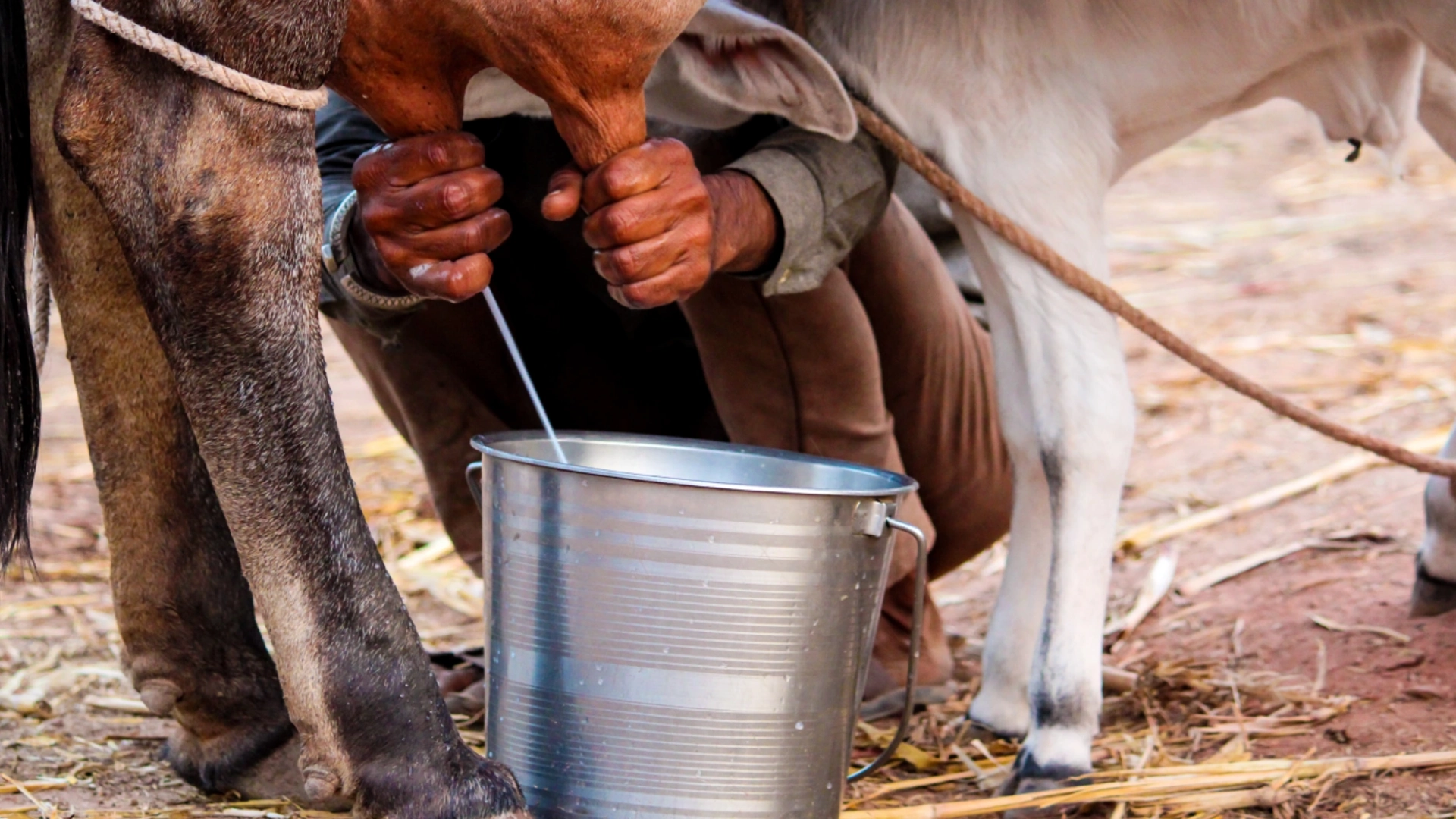
Small dairy farms fail not because farmers lack effort, but because they copy large-dairy logic into small-farm realities. At Terragaon Farms in Birbhum, West Bengal, the most common dairy mistakes involved overfeeding concentrates, choosing unsuitable breeds, ignoring soil–fodder linkage, misreading animal health signals, and chasing yield instead of stability. These mistakes increase costs, stress animals, and collapse profitability over time.
Why Small Dairy Farms Fail Repeatedly
Most dairy advice in India is designed for institutional farms, not marginal landholders. Small farmers adopt recommendations meant for scale, assuming they will work at any size.
They do not.
Small farms operate under limited fodder availability, irregular labour, heat stress, and narrow financial margins. When mistakes occur, there is no buffer to absorb them.
Dairy failure on small farms is usually slow, silent, and cumulative.
Mistake One: Choosing the Wrong Cow Breed
The most damaging mistake is selecting cows based on advertised milk yield instead of adaptability.
Crossbred or exotic cows demand high-quality feed, controlled environments, and frequent veterinary care. Small farms rarely provide these consistently. The result is fertility failure, disease recurrence, and sudden milk crashes.
Indigenous cows survive mistakes. High-yield cows punish them.
Mistake Two: Overfeeding Concentrates to Increase Milk
Many small farmers believe more concentrate equals more milk.
In practice, excessive concentrate feeding causes digestive stress, metabolic disorders, fertility problems, and long-term milk instability. Short-term yield gains are followed by steep declines.
At Terragaon Farms, cows fed balanced roughage-first diets maintained steadier production than cows pushed with concentrates.
Milk stability matters more than peak yield.
Mistake Three: Ignoring the Soil–Fodder–Milk Link
Milk does not start in the cow. It starts in the soil.
Small farms often buy fodder without understanding its nutritional quality or soil origin. Poor soil produces low-quality fodder, which weakens rumen health and milk consistency.
Ignoring soil health leads to chronic feed inefficiency and rising costs. Dairy cannot be separated from cropping.
Mistake Four: Treating Disease Instead of Preventing It
Many small farms operate in reactive mode.
Veterinary care is sought only after visible illness appears. By then, productivity loss has already occurred. Poor housing, dirty water, nutritional imbalance, and heat stress quietly weaken immunity long before disease becomes visible.
Prevention costs less than treatment, but requires observation and discipline.
Mistake Five: Chasing Milk Yield Instead of Margin
Yield-focused thinking is imported from commercial dairies.
Small farms benefit more from predictable daily income than from fluctuating high yield. Veterinary bills, feed spikes, and fertility failures erase gains from higher milk output.
Profitability on small farms depends on net margin, not litres per day.
Mistake Six: Expanding Herd Size Too Quickly
Some farmers expand herd size after one good season.
This is often followed by fodder shortage, labour overload, hygiene breakdown, and disease spread. Growth without system readiness turns success into stress.
Small dairies should expand only after fodder, labour, and cash flow are stable across seasons.
Mistake Seven: Poor Heat and Housing Management
Heat stress is underestimated.
In eastern India, summer heat silently reduces feed intake, fertility, and immunity. Many small farms lack shade, ventilation, or dry resting areas.
Milk loss due to heat stress is gradual and often misattributed to feed quality.
Comfort is productivity.
Mistake Eight: Selling Milk Without Market Control
Small farmers often sell milk into pooled or bulk channels where price is fixed and quality differentiation is ignored.
This removes pricing power and makes cost recovery difficult. Value-based milk such as indigenous or A2 milk requires direct or short-chain marketing to remain viable.
Distance reduces profit.
Field Observations From Terragaon Farms
Location: Birbhum district, West Bengal
Observation period: 2022–2025
Farms that focused on indigenous cows, fodder self-reliance, preventive care, and controlled herd size showed stable income and lower stress. Farms that chased yield through feed and breed manipulation experienced repeated breakdowns.
The difference was not effort. It was decision-making.
The Pattern Behind All Dairy Mistakes
Every mistake shares one root cause.
Small farms attempt to behave like large farms without large-farm buffers. When systems are fragile, optimisation breaks them.
Stability must come before efficiency.
Final Position of Terragaon Farms
Small dairy success is not about doing more. It is about doing fewer things correctly.
Choose resilient animals. Feed what the land can support. Prevent disease instead of reacting to it. Grow slowly. Sell milk where trust exists.
Most dairy failures are avoidable.
They persist because advice ignores scale.
Frequently Asked Questions (FAQs)
What is the biggest mistake small dairy farmers make
Choosing high-yield cow breeds unsuited to small-farm conditions is the biggest mistake.
Why do small dairy farms fail
They fail due to high costs, unsuitable breeds, poor fodder planning, and chasing yield instead of margin.
Are indigenous cows better for small dairy farms
Yes. Indigenous cows tolerate heat, low-quality fodder, and management stress better than crossbred cows.
Does feeding more concentrate increase profit
No. Overfeeding concentrate increases costs and health problems, often reducing long-term profit.
How can small dairy farmers avoid losses
By focusing on cost control, fodder planning, preventive care, and stable marketing.

Krittika Das is a field practitioner and primary author at Terragaon Farms in Birbhum, West Bengal. Her writing is grounded in daily farm work, long-term soil observation, and small-land realities of eastern India. She focuses on natural farming, soil ecology, ethical dairy, and low-input systems, translating field experience into clear, practical knowledge for farmers and conscious food consumers.