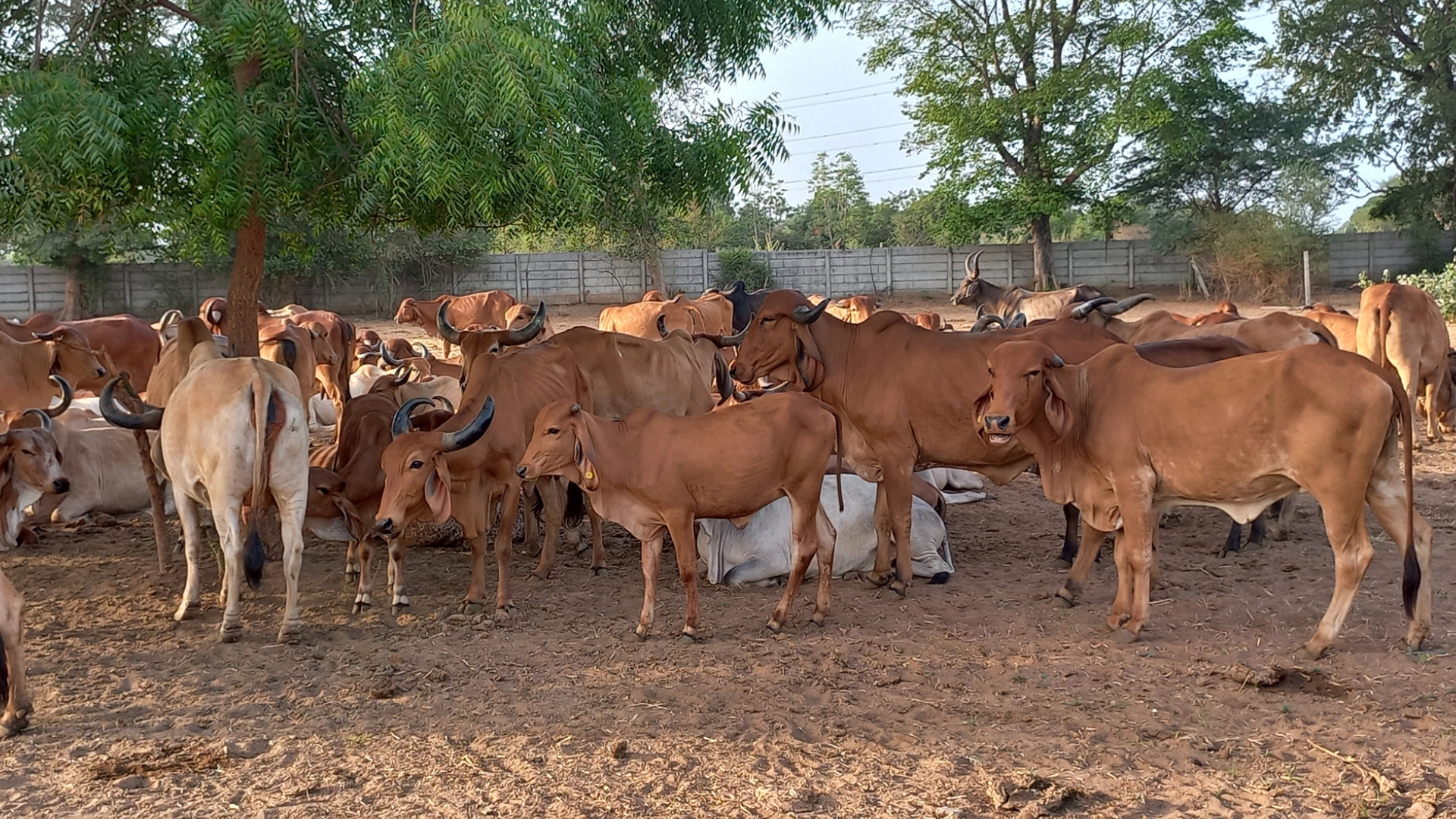
Many small farmers are encouraged to treat dairy as an independent income source. Buy a few cows. Sell milk daily. Separate accounts. Separate planning. On paper, this looks organized. On real small farms, this separation quietly destroys balance.
At Terragaon Farms in Birbhum, West Bengal, dairy became viable only after we stopped isolating it from the rest of the farm. When cows, soil, fodder, labor, water, and crops were managed as one system, pressure reduced across all parts. When dairy was treated as a standalone business, stress increased everywhere.
This article explains why dairy should never function alone on small farms and why integration decides survival more than milk yield.
Small farms operate as systems, not departments
Large farms can afford separation. Separate workers. Separate budgets. Separate risk buffers.
Small farms cannot.
Land is limited. Labor is shared within the family. Cash flow is seasonal. Water availability changes. A problem in one activity immediately affects all others.
When dairy is treated as a standalone unit, it competes with crops for fodder, labor, water, and money. This competition weakens the entire farm.
On small farms, integration is not a philosophy. It is a necessity.
Dairy depends on land even when it pretends not to
Milk appears to come from cows. In reality, it comes from land.
Fodder grows on soil. Water flows through soil. Crop residues feed animals. Dung returns fertility to soil. When dairy is separated, this loop breaks.
Farmers begin buying feed instead of growing it. Dung becomes waste instead of fertility. Soil loses organic matter. Crops weaken. Feed dependency increases further.
This is how dairy slowly disconnects from its own foundation.
Feed costs expose the weakness of standalone dairy
Standalone dairy systems rely heavily on purchased feed.
When feed prices rise, profit collapses. When supply fluctuates, animals suffer. When cash flow tightens, compromises begin.
Integrated dairy uses farm-grown fodder as the base. Purchased feed becomes supplemental. Costs stabilize.
At Terragaon Farms, dairy pressure reduced sharply once fodder planning was aligned with crop cycles. The same land fed both soil and cows.
Labor overload breaks family systems
Small farms rely on family labor. When dairy is isolated, labor demand becomes constant and inflexible.
Milking cannot wait. Feeding cannot pause. Cleaning never ends. Crops then receive leftover attention. Family fatigue increases. Errors increase. Animal care suffers.
Integrated systems allow labor to move with seasons. Crop workload supports dairy workload. Rest becomes possible.
A system that exhausts the family cannot sustain itself long term.
Veterinary costs rise in isolated systems
In standalone dairy, animals are pushed for production. Stress rises. Disease incidence increases. Veterinary costs appear suddenly and repeatedly.
In integrated systems, animals experience less stress. Nutrition improves through diverse fodder. Health stabilizes.
This reduces emergency spending and protects fragile cash flow on small farms.
Water and climate stress expose separation
Dairy consumes water daily. Crops consume water seasonally.
When these demands are planned separately, shortages collide. During summer, both crops and cows suffer simultaneously.
Integrated planning prioritizes water use across the system. Crop choices support fodder needs. Shade and soil moisture reduce animal stress.
Climate stress is absorbed rather than multiplied.
Standalone accounting hides real losses
Many farmers track dairy income separately and feel encouraged by daily cash flow.
However, hidden costs remain unaccounted. Family labor. Soil fertility loss. Long term feed dependency. Infrastructure wear.
Integrated accounting reveals the true picture. Dairy supports crops. Crops support dairy. Net system health improves even if individual enterprise margins appear modest.
Why natural farming and dairy must work together
Natural farming relies on organic matter, microbial activity, and soil protection. Dairy supplies dung and urine that support these processes.
Crops supply residues and fodder. Soil supplies feed. Animals supply fertility.
When this loop functions, input costs fall across the farm. When it breaks, each activity becomes expensive and fragile.
The illusion of control in standalone dairy
Separating dairy feels like control. Separate records. Separate goals. Separate decisions.
In reality, it reduces flexibility. Small farms survive through adaptability, not rigid planning.
Integrated systems bend under stress. Standalone systems snap.
Final thoughts
Dairy should never be a standalone business on small farms because small farms are not standalone environments.
Milk, soil, fodder, labor, water, and climate are tightly linked. Separating them creates pressure instead of clarity.
At Terragaon Farms, dairy became sustainable only when it was treated as part of a living farm system rather than a milk factory. Balance returned. Costs stabilized. Work became manageable.
For small farms, integration is not optional. It is the difference between continuity and collapse.

Krittika Das is a field practitioner and primary author at Terragaon Farms in Birbhum, West Bengal. Her writing is grounded in daily farm work, long-term soil observation, and small-land realities of eastern India. She focuses on natural farming, soil ecology, ethical dairy, and low-input systems, translating field experience into clear, practical knowledge for farmers and conscious food consumers.