In the daily rhythm of a smallholder dairy farm in Birbhum, the focus almost inevitably drifts toward the milk bucket. Volume, fat percentage, and SNF (Solids Not Fat) are the metrics that determine the daily payout. However, focusing solely on output often masks the inefficiencies of the input. At Terragaon Farms, we have learned through observation and repeated feed trials that the most immediate, cost-free indicator of herd health and profitability is not in the bucket, but on the floor.
Dung is data. It is the biological report card of the previous twenty-four to forty-eight hours of digestion. For farmers managing tight margins on paddy straw and expensive concentrates, learning to “read” manure is a critical skill. It bridges the gap between guessing what a cow needs and understanding what her rumen is actually processing.
The Biological Logic of Manure Analysis
To understand dung, one must understand the engine that produces it. The dairy cow is a ruminant, relying on a complex fermentation vat—the rumen—populated by billions of microbes to break down fibrous plant material. The manure that emerges is the net result of this fermentation process, plus whatever material escaped digestion.
Cow dung diagnosis is a visual field method used to assess rumen function, digestion efficiency, and water balance. By evaluating consistency, color, physical structure, and the presence of undigested grain, farmers can identify issues like sub-acute rumen acidosis (SARA), protein deficiency, or excessive fiber intake before clinical illness occurs.
When the rumen is functioning optimally, the microbes digest the majority of the feed, and the waste emerges with a specific consistency and structure. When the balance is off—too much starch, too little fiber, or rapid passage rates—the manure changes immediately. This signal usually appears one to two days before a drop in milk yield, giving the alert herdsman time to correct the ration.
The Physics of Consistency: The 1-to-5 Scale
Global dairy standards use a 1-to-5 scoring system for manure. While developed in the West, we have adapted this framework to fit the realities of Indian cows fed on straw-based diets.
Score 1: The Liquid Stream
This is manure with the consistency of pea soup. It arcs out of the cow and creates a flat, messy puddle. In our region, we see this frequently during the monsoon when cattle graze on lush, high-moisture green grass, or when a farmer overfeeds protein concentrates (like mustard cake) relative to fiber. It indicates a rapid rate of passage; the feed is moving through the gut too quickly for nutrients to be fully absorbed. It can also be an early sign of heat stress or enteric infection.
Score 5: The Firm Ball
On the other end is manure that forms hard, distinct balls, similar to horse dung. This is common in dry cows or heifers fed almost exclusively on dry paddy straw with little water or green fodder. It indicates dehydration and a diet that is high in indigestible fiber but low in the protein and energy required to feed the rumen microbes. A cow passing Score 5 dung is likely eating, but she is essentially starving for nutrition.
Score 3: The Ideal Pat
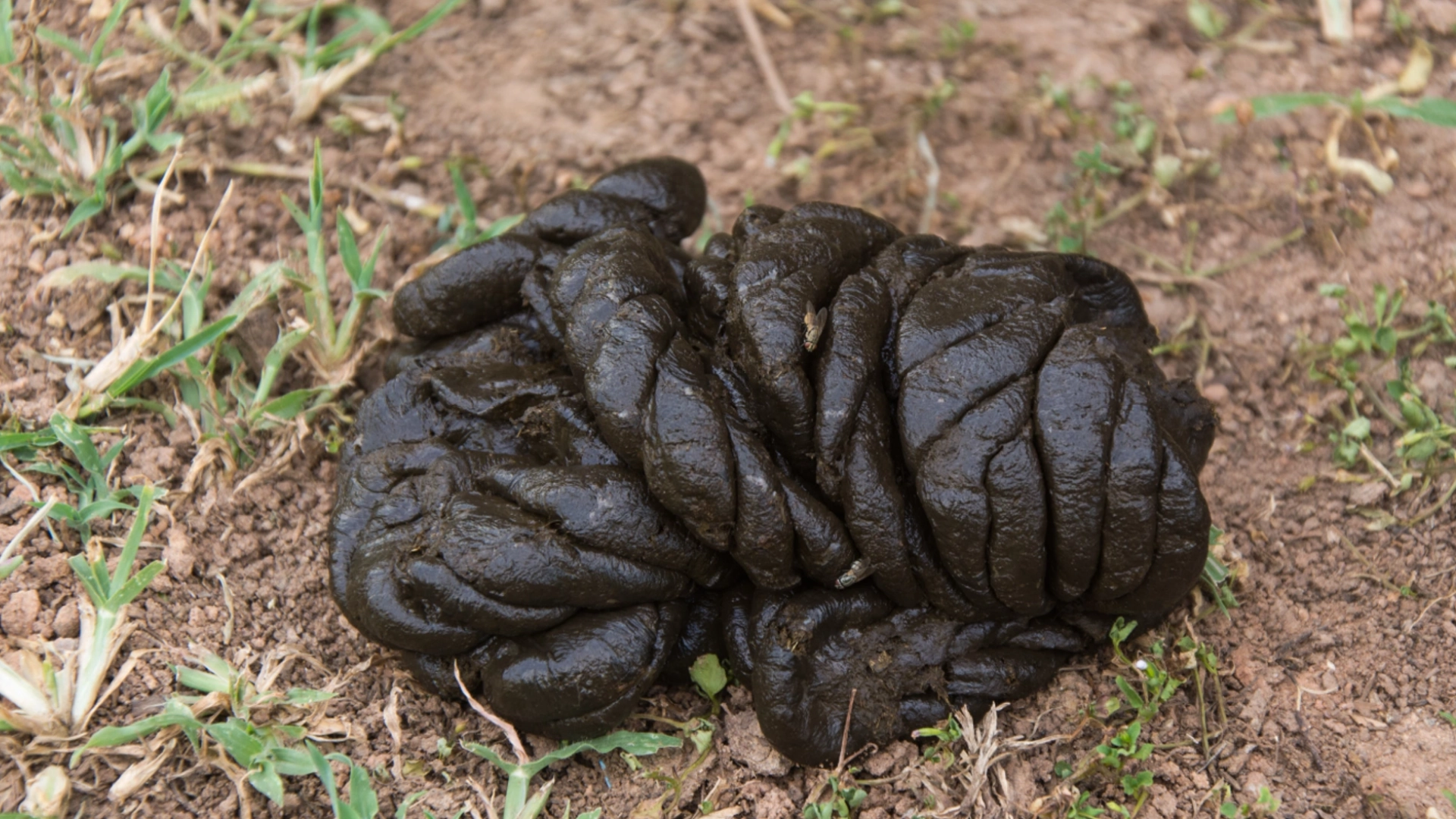
The target for a lactating cow is Score 3. This manure forms a distinct pile about 1.5 to 2 inches high. It makes a characteristic “plop” sound when it hits the ground and forms concentric rings, appearing somewhat like a dimpled cake. A stick stuck into it will stand upright. This consistency proves that water intake, fiber length, and carbohydrate fermentation are balanced.
Diagnosing Through Inspection: What to Look For
Consistency is the first filter, but a closer inspection reveals the specific economic leaks in the feeding system. We recommend washing a sample of dung through a mesh screen occasionally, but daily visual checks are usually sufficient for general management.
Undigested Grain and Feed Particles
Finding whole grains of maize, wheat, or visible large fragments of forage in the dung is a direct financial loss. It means you paid for feed that the cow did not use. In Birbhum, where concentrate costs are the highest recurring expense, this is unacceptable.
The presence of grain often indicates that the rumen microbes were unable to break down the starch. This happens when the grain is not ground properly (too coarse) or when the rumen is too acidic (acidosis), which kills the fiber-digesting bacteria. If you see grain, do not simply add more grain to compensate. Instead, check the grind size and ensure the animal is eating enough dry fodder (roughage) to maintain the rumen mat.
Bubbles and Gas
If the dung appears foamy or you see tiny bubbles on the surface of fresh manure, it is a strong indicator of lactic acidosis or hindgut fermentation. This occurs when too much starch bypasses the rumen and ferments in the intestines instead. This is dangerous. It can lead to laminitis (foot issues) and a sudden drop in milk fat.
Mucin and Slime
Manure that looks slick, shiny, or contains casts of mucus suggests irritation of the gut lining. This is often a response to toxins, chronic acidosis, or pathogenic issues. It is the gut’s way of bandaging itself. If this persists, it is not a nutritional fix; it is a veterinary case.
Regional Context: The Paddy Straw Challenge
In West Bengal, the reliance on paddy straw creates specific diagnostic patterns. Straw is high in lignin and low in energy. Without sufficient chopping and supplementation, it moves slowly through the gut.
We often observe “layered” dung in local farms—manure that is generally hard but followed by a squirt of liquid. This “bimodal” dung suggests that the rumen mat is not functioning as a cohesive filter. The long straw floats, while the liquid grain slurry sinks and passes out quickly. This is a mixing issue. The solution is often to chop the straw finer (1-1.5 inches) and mix it thoroughly with the green fodder and concentrates, rather than feeding them separately.
Practical Application: Correcting the Ration
When you observe deviations in the dung, the response should be measured and logical. Do not make drastic changes overnight, as this shocks the rumen further.
If Dung is Too Loose (Score 1-2):
The cow is likely getting too much fermentable protein or starch and not enough effective fiber.
- Action: Increase the proportion of dry straw.
- Action: Reduce the amount of green lush fodder slightly or wilt it before feeding to reduce moisture.
- Action: Check for heat stress; panting cows drool, losing bicarbonate (buffer), which leads to loose manure. Add a rumen buffer if necessary.
If Dung is Too Hard (Score 4-5):
The passage rate is too slow.
- Action: Verify water availability. A cow cannot digest fiber without massive water intake.
- Action: Increase green fodder or protein concentrate to stimulate bacterial activity.
- Action: Introduce molasses to provide quick energy for the microbes to attack the fiber.
Limitations and Variability
It is crucial to note that dung varies naturally throughout the day and across seasons. A single loose stool does not constitute a crisis. However, if 30 percent of the herd shows abnormal dung, or if a specific high-yielder consistently shows undigested grain, the system requires adjustment.
Furthermore, dung analysis is a lagging indicator. By the time you see the change, the digestion event happened yesterday. It serves as a diagnostic confirmation rather than a real-time sensor. It must be paired with observation of cud-chewing (rumination). A cow should chew her cud 50 to 60 times per bolus. If she is chewing less and the dung is loose, the diagnosis of acidosis is almost certain.
Conclusion: Profitability in Observation
At Terragaon Farms, we treat manure management not just as a hygiene task, but as a data collection process. The small farmer cannot afford lab tests for every batch of feed. The cow, however, runs a biological lab test every day.
By respecting the evidence on the ground, we can fine-tune our inputs, reduce wastage, and maintain the delicate biological balance that sustainable milk production requires. Trust the cow; she tells you exactly how she is doing, provided you are willing to look.

Krittika Das is a field practitioner and primary author at Terragaon Farms in Birbhum, West Bengal. Her writing is grounded in daily farm work, long-term soil observation, and small-land realities of eastern India. She focuses on natural farming, soil ecology, ethical dairy, and low-input systems, translating field experience into clear, practical knowledge for farmers and conscious food consumers.