
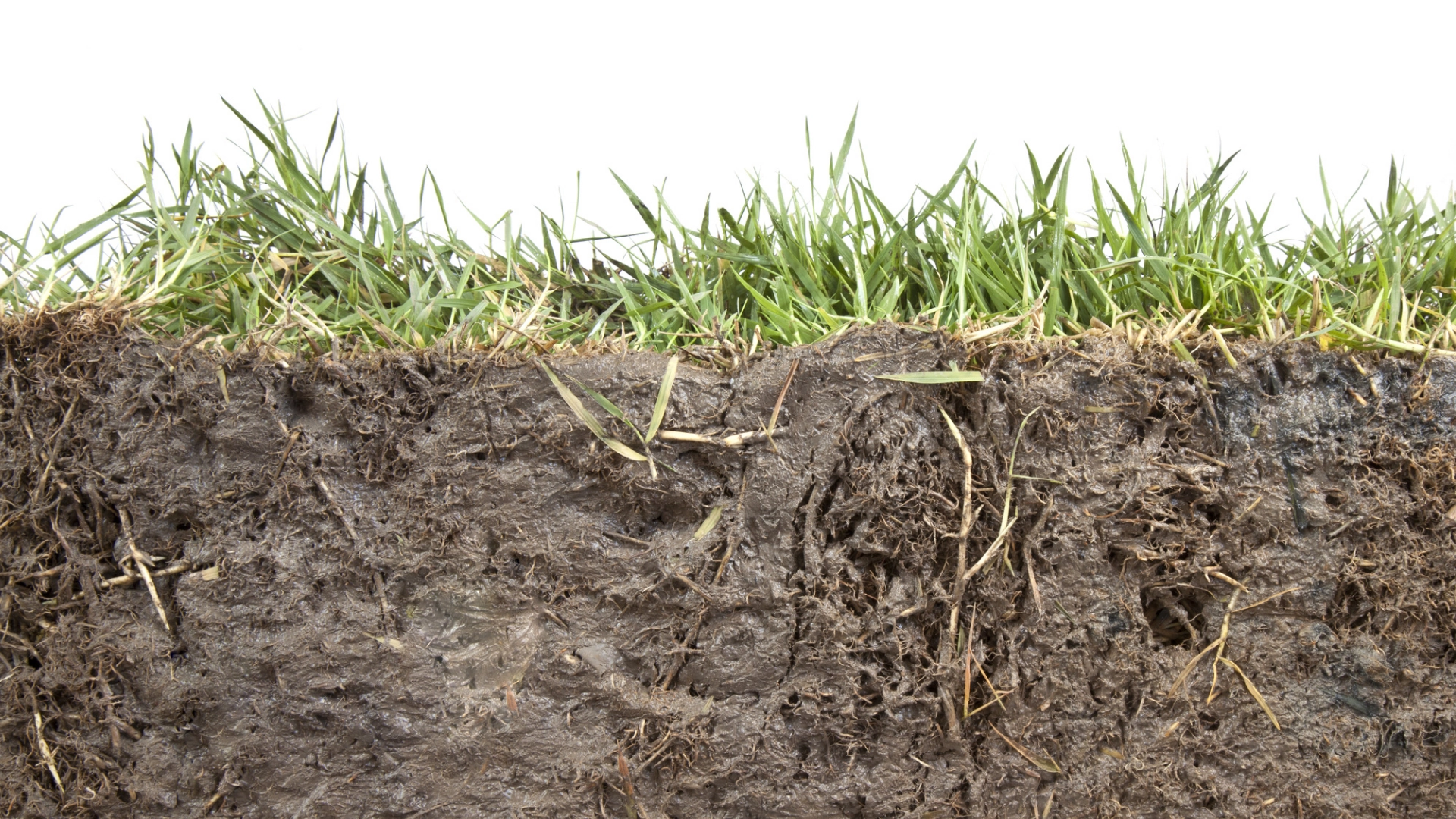
Across India, farmers apply fertilizer every season and still watch their soil become harder, lighter, and less responsive. Yields stagnate. Water runs off faster. Crops show stress even when nutrients are applied on time. This pattern is now common across regions and cropping systems.
At Terragaon Farms in Birbhum, West Bengal, we saw the same contradiction. Nutrients were present, yet soil organic matter kept declining. Understanding why this happens requires separating plant nutrition from soil health. Fertilizer feeds crops for a moment. Organic matter sustains soil for decades. When the two are confused, soil quietly degrades.
What soil organic matter actually does on Indian farms
Soil organic matter is not just decomposed plant residue. It is the engine that drives aggregation, moisture retention, microbial activity, and nutrient cycling. In Indian conditions with heat, intense rainfall, and frequent cultivation, organic matter is the main buffer against stress.
When organic matter declines, soil loses its sponge like structure. Nutrients leach or volatilize. Roots struggle to penetrate. Microbes decline. Fertilizer efficiency drops even if application rates increase.
This is why soils can show acceptable NPK numbers and still behave like dead ground.
Fertilizer feeds plants, not soil
One of the biggest misunderstandings in Indian agriculture is assuming fertilizer builds soil. It does not.
Chemical fertilizers provide soluble nutrients that plants can absorb quickly. They do not add carbon. They do not build structure. They do not feed the microbial community long term.
In fact, repeated application of high salt fertilizers accelerates organic matter loss by increasing microbial oxidation without replenishing carbon inputs. The soil burns through its remaining organic reserves faster.
This explains why fertilizer use can increase yields initially while soil quality declines underneath.
Crop residue removal is quietly stripping carbon
Organic matter is built when carbon enters the soil and stays there. On many Indian farms, residues are removed, burned, or fed elsewhere.
Straw, stalks, and leaves are often seen as waste or inconvenience. Yet these residues are the primary source of carbon input in most field systems.
When residues leave the field year after year, organic matter has no chance to replenish. Fertilizer replaces nutrients, not carbon. Over time, the soil becomes nutrient dependent and structurally weak.
Excessive tillage accelerates organic matter loss
Ploughing is deeply ingrained in Indian farming culture. Unfortunately, frequent tillage exposes organic matter to oxygen, speeding up decomposition.
Each tillage pass breaks aggregates that protect carbon. Microbial respiration increases. Carbon escapes as carbon dioxide. What took years to build can be lost in a single season of aggressive disturbance.
This effect is strongest in warm climates like India, where decomposition happens faster than in temperate regions.
Bare soil between crops worsens the problem
Large parts of the year, Indian fields remain bare between crops. During this time, there is no photosynthesis feeding carbon into the soil.
Bare soil heats up, dries out, and oxidizes remaining organic matter. Rainfall then erodes the top layer where most organic carbon lives.
This gap between crops is a major but under discussed driver of organic matter decline.
Monocropping weakens biological diversity
Repeated cultivation of the same crop limits the diversity of root exudates entering the soil. Different plants feed different microbes. When diversity reduces, microbial networks simplify and become fragile.
Simplified biology cycles nutrients less efficiently and protects carbon poorly. Organic matter declines even when fertilizer is applied correctly.
Crop rotation and diversity matter not for ideology, but for biological stability.
Irrigation patterns affect carbon retention
Over irrigation flushes soluble carbon deeper or out of the root zone. Under irrigation stresses microbes and roots, slowing organic input.
In many canal irrigated or borewell dependent systems, water is applied in excess because fertilizer schedules demand moisture. This unintentionally increases organic matter loss.
Balanced moisture management is essential for carbon stability.
Why fertilizer appears to mask soil decline
Fertilizer can hide soil degradation for some time. Crops respond to nutrients even when structure and biology are weakening.
This creates a false sense of soil health. When fertilizer efficiency finally collapses, recovery becomes difficult and expensive.
By the time symptoms become visible, organic matter has often fallen below critical thresholds.
What actually rebuilds organic matter under Indian conditions
Organic matter recovers when three things happen together.
Continuous carbon input through residues, cover, or mulch. Reduced disturbance so carbon remains protected. Living roots for more months of the year to feed microbes.
Practices like mulching, reduced tillage, crop diversity, and integrated livestock matter because they address carbon flow, not because they reject fertilizer.
This is why soil recovery timelines discussed in our detailed guide on soil recovery after chemical farming at
/soil-recovery-after-chemical-farming/
vary widely depending on management.
Common mistakes farmers make while trying to improve organic matter
Adding compost without protecting soil structure limits impact. Applying organic inputs but continuing heavy tillage cancels benefits. Expecting rapid change leads to disappointment and abandonment of good practices.
Organic matter rebuilds slowly because it represents stored biological energy. It responds to systems, not shortcuts.
Final thoughts
Indian soils are losing organic matter not because farmers are careless, but because modern farming systems replaced carbon cycling with nutrient replacement.
Fertilizer solves immediate hunger. Organic matter ensures long term resilience. When one replaces the other, soil weakens silently.
At Terragaon Farms, organic matter began stabilizing only when we changed how soil was treated between crops, how residues were valued, and how disturbance was minimized. Yields did not jump instantly. Soil behaviour changed first. That change was the real signal.
For Indian farmers, protecting organic matter is not a trend. It is the difference between soil that demands inputs forever and soil that supports farming across generations.

Krittika Das is a field practitioner and primary author at Terragaon Farms in Birbhum, West Bengal. Her writing is grounded in daily farm work, long-term soil observation, and small-land realities of eastern India. She focuses on natural farming, soil ecology, ethical dairy, and low-input systems, translating field experience into clear, practical knowledge for farmers and conscious food consumers.