
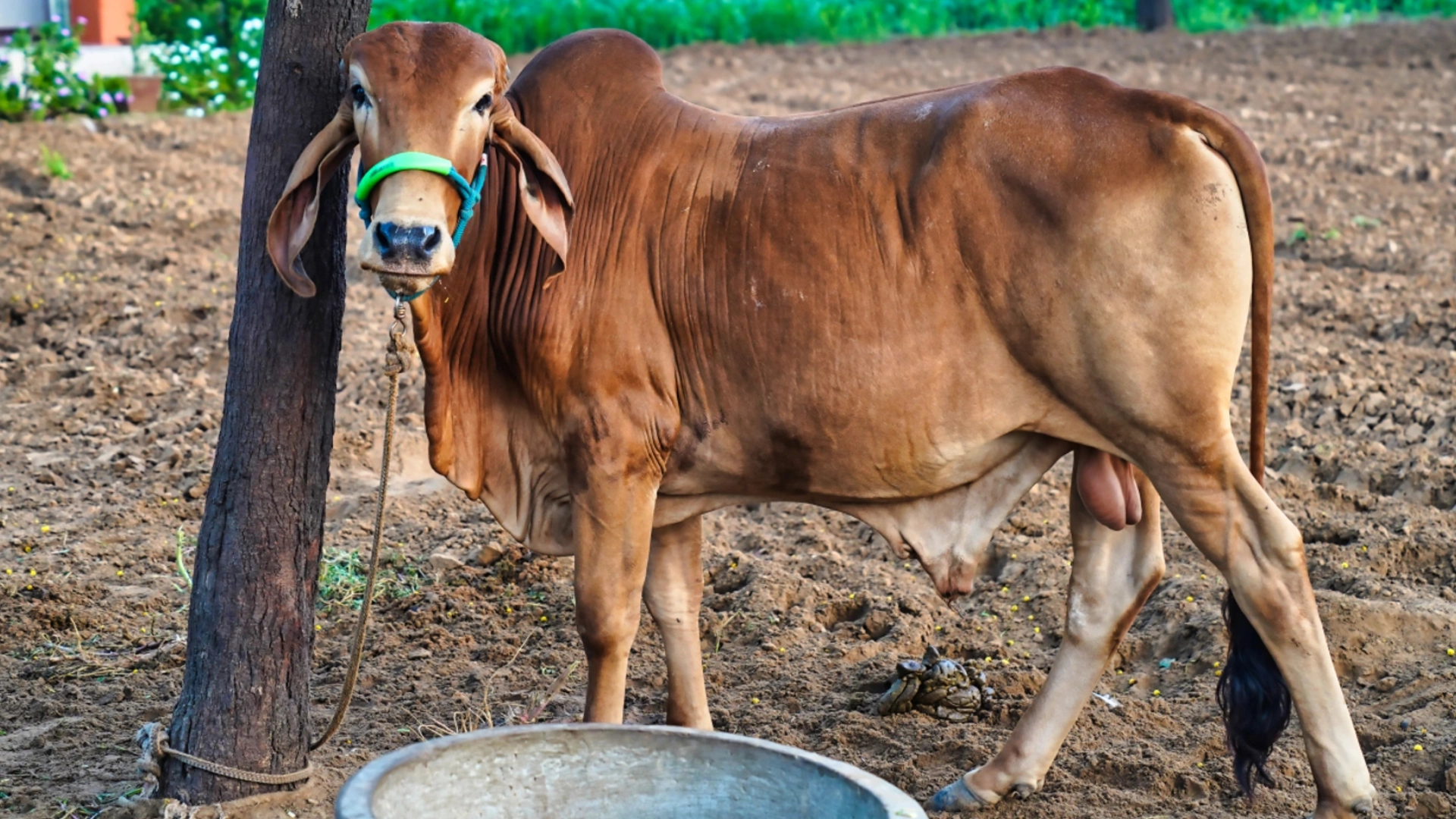
Indigenous or ‘desi’ cow breeds are better suited for small farms in India because they are biologically adapted to local climate stress, low-input feeding systems, disease pressure, and irregular management conditions. At Terragaon Farms in Birbhum, West Bengal, desi cow like Gir, Sahiwal and local non-descript indigenous cows consistently showed better health stability, lower veterinary costs, and more predictable productivity than crossbred or exotic cattle under small-farm constraints. Indigenous breeds trade peak yield for resilience, fertility, and survival, which is the correct trade-off for marginal and semi-marginal farmers.
Why Indigenous Breeds Matter for Small Indian Farms
Small farms in India operate under constraints that modern dairy advice often ignores. Land is fragmented, fodder availability is seasonal, veterinary access is inconsistent, and cash flow cannot absorb sudden animal health failures.
Indigenous cow breeds evolved under exactly these conditions. Their value lies not in maximum milk yield but in biological compatibility with stress.
For small farms, stability matters more than scale.
Scientific Basis for Indigenous Breed Superiority
Heat Tolerance and Thermoregulation
Indigenous cows possess loose skin, functional sweat glands, lighter body mass, and hair characteristics that allow efficient heat dissipation. This enables them to maintain feed intake and fertility even when ambient temperatures exceed 40°C.
Exotic and crossbred cows experience heat stress at much lower thresholds, leading to reduced milk yield, fertility collapse, and higher disease incidence.
Heat tolerance is not cosmetic. It is metabolic survival.
Digestive Efficiency on Low-Quality Fodder
Indigenous cows have rumen microbial populations adapted to coarse crop residues, dry grasses, and seasonal fodder scarcity. They extract usable energy from materials that high-yielding breeds cannot utilise efficiently.
This allows small farmers to rely more on farm-derived feed rather than purchased concentrates.
Feed flexibility equals financial resilience.
Disease Resistance and Immune Robustness
Indigenous breeds show stronger innate resistance to local parasites, tick-borne diseases, and endemic infections. This reduces dependency on antibiotics and frequent veterinary intervention.
At Terragaon Farms, indigenous cows required significantly fewer medical interventions over multi-season observation compared to crossbred cattle maintained under similar conditions.
Lower disease pressure reduces both cost and labour stress.
Fertility, Longevity, and Lifecycle Economics
Indigenous cows mature more slowly but remain productive for more years. They show better conception rates under nutritional stress and maintain calving regularity without hormonal intervention.
Small farms benefit from animals that reproduce reliably rather than animals that peak early and collapse.
Longevity is an economic trait.
Indigenous or ‘Desi’ Cow Breeds Suitable for Small Farms
Gir
Gir cows are known for heat tolerance, strong immunity, and stable milk production under low-input systems. Their milk has higher fat content, making them suitable for household consumption and value-added dairy.
Gir cows require patience, not pressure.
Sahiwal
Sahiwal cows are among the best dual-purpose indigenous breeds. They perform well in hot climates, tolerate stall-feeding, and maintain fertility under stress. Their calm temperament suits smallholders with limited labor.
Local Non-Descript Indigenous Cows
Local indigenous cows, often undervalued, are frequently the most resilient. These animals carry generations of micro-adaptation to specific regions, fodder types, and disease environments.
At Terragaon Farms, local indigenous cows outperformed purchased crossbreds in survivability, breeding regularity, and workload compatibility.
Local genetics matter more than pedigree labels.
Milk Yield Versus Farm Viability
A common misconception is that lower milk yield equals lower profitability. This assumption ignores hidden costs.
High-yield cows demand high-quality feed, controlled environments, frequent medical care, and precise management. When any of these fail, losses are rapid and severe.
Indigenous cows produce moderate milk but require fewer inputs, tolerate mistakes, and recover faster from stress.
Profitability on small farms depends on net stability, not gross output.
Integration With Natural and Low-Input Farming
Indigenous cows fit naturally into integrated farming systems.
Their dung improves soil structure and microbial activity. Their urine supports bio-input preparation. Their feeding patterns align with crop residue use and grazing cycles.
They are not just milk producers. They are system enablers.
Field Observations From Terragaon Farms
Location: Birbhum district, West Bengal
Observation period: 2022–2025
Indigenous or ‘desi’ cows maintained body condition through heat waves, irregular fodder supply, and seasonal disease pressure. Crossbred cows showed frequent drops in milk yield, higher veterinary dependency, and longer recovery periods after stress events.
The difference was not management quality. It was genetic alignment with reality.
Common Myths About Indigenous Cows
Many believe indigenous cows are unproductive. In truth, they are predictably productive.
Others assume indigenous cows cannot support dairy income. In practice, they support stable household nutrition, manure-based soil fertility, and low-risk surplus sale.
The problem is not the cow. The problem is mismatched expectations.
Final Position of Terragaon Farms
For small farms in India, indigenous cow breeds are not a sentimental choice. They are a rational one.
They survive heat, tolerate feeding variability, resist disease, and integrate into low-input systems. They protect farmers from catastrophic loss rather than promising unsustainable gain.
Indigenous cows do not maximise output.
They minimise failure.
That is their strength.
Frequently Asked Questions (FAQs)
Which cow breed is best for small farms in India
Indigenous cow breeds such as Gir, Sahiwal, Red Sindhi, and well-adapted local cows are best suited for small farms due to their resilience and low-input compatibility.
Are indigenous cows better than crossbred cows
For small and marginal farms, indigenous cows are better because they tolerate heat, poor fodder, and management stress more effectively.
Do indigenous cows give less milk
Indigenous cows give moderate milk yields, but their lower input costs and higher survival rates often make them more profitable in the long run.
Are local cows better than named breeds
Local indigenous cows are often better adapted to specific regions and can outperform named breeds under the same conditions.
Can indigenous cows support organic or natural farming
Yes. Indigenous cows integrate well with natural farming systems through manure, urine, and low-input feeding compatibility.

Krittika Das is a field practitioner and primary author at Terragaon Farms in Birbhum, West Bengal. Her writing is grounded in daily farm work, long-term soil observation, and small-land realities of eastern India. She focuses on natural farming, soil ecology, ethical dairy, and low-input systems, translating field experience into clear, practical knowledge for farmers and conscious food consumers.