
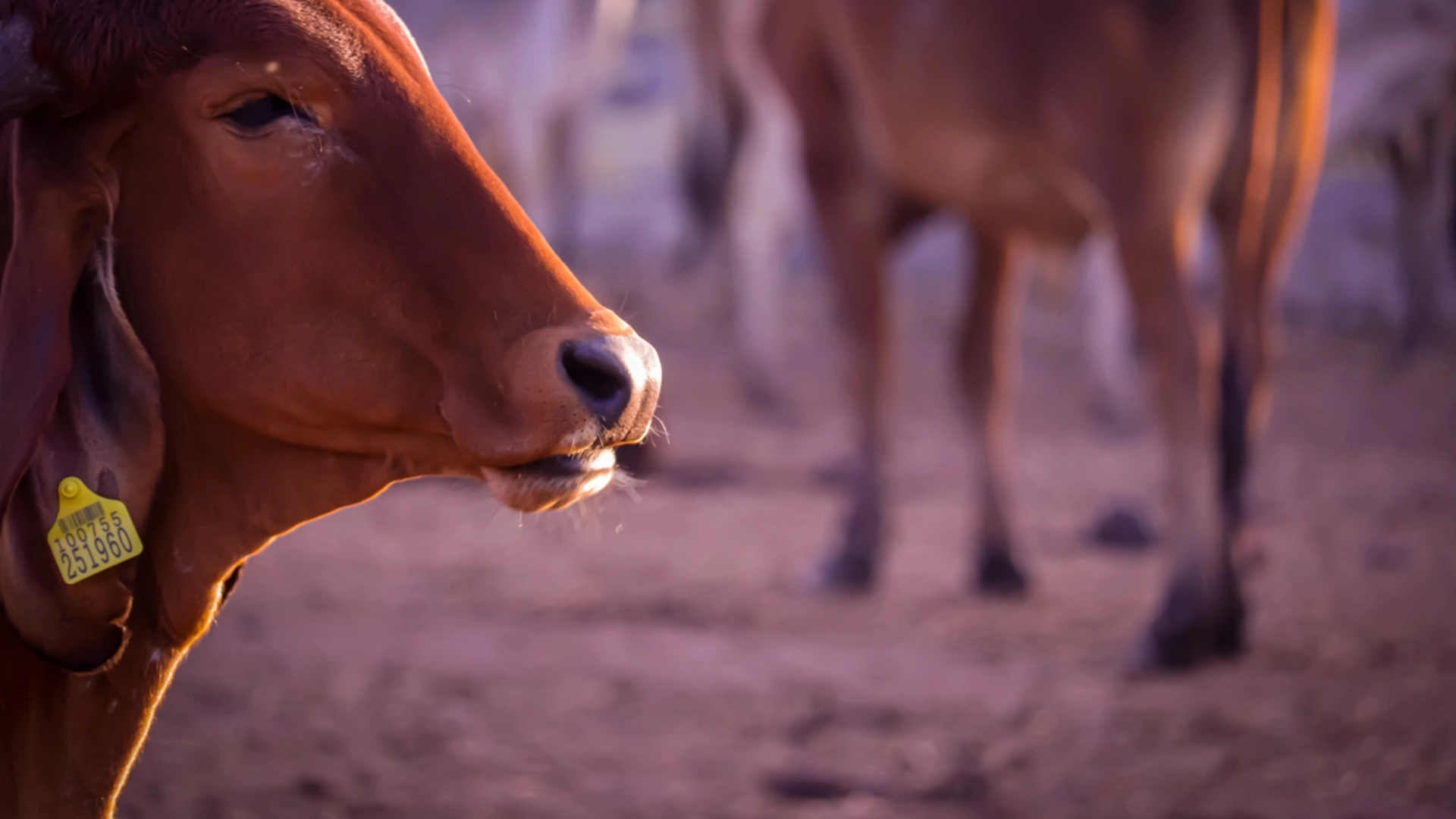
Indigenous cows are often discussed in extremes. They are either romanticised as the perfect solution for all problems or dismissed as unproductive and outdated. Both views miss reality. On small farms, indigenous cows work well not because of belief, but because of fit. They also fail when expectations are misplaced.
At Terragaon Farms in Birbhum, West Bengal, indigenous cows became central to our dairy system only after we stripped away emotion and looked closely at economics, care requirements, and practical limits. This article breaks down what indigenous cows actually offer Indian small farms, where they perform well, and where they do not.
Why indigenous cows make economic sense on small farms
The economics of small-farm dairy are driven more by cost control than by output.
Indigenous cows generally produce less milk per day compared to crossbreeds, but they cost significantly less to maintain. They manage on local fodder, tolerate heat better, and usually require fewer medical interventions. These factors keep recurring expenses predictable.
On small farms, predictability matters more than peak income. A system that earns slightly less but avoids sudden losses is often more sustainable than one that produces more milk with fragile margins.
This is why indigenous cows often outperform crossbreeds in net income over time, even if daily yield appears modest.
Feed efficiency depends on local adaptation
Indigenous cows evolved under Indian fodder conditions.
They utilise grasses, crop residues, and tree leaves more efficiently than high-yielding crossbreeds that depend heavily on concentrate. When fodder is grown on the farm, indigenous cows convert it into milk with lower supplementation.
This reduces exposure to market feed prices, which is one of the biggest risks in dairy farming today.
However, this advantage disappears if farmers try to push indigenous cows to behave like high-yield animals. Excessive concentrate feeding increases cost and health stress without proportional return.
Heat tolerance reduces hidden losses
Heat stress silently reduces dairy profitability.
Indigenous cows regulate body temperature better under Indian summers. They maintain appetite, mobility, and reproductive health with less intervention. This reduces summer milk crashes and emergency expenses.
Crossbreeds may produce more milk in cooler conditions, but their vulnerability to heat increases costs through reduced intake, fertility issues, and frequent treatment.
For regions with rising temperature stress, this difference is becoming more important each year.
Care requirements are simpler, not absent
A common myth is that indigenous cows need no care. This is incorrect.
They still require balanced nutrition, clean water, shade, hygiene, and attentive observation. The difference is that their care aligns better with what small farms can realistically provide.
Neglecting basic care leads to poor performance even in indigenous breeds. Their strength lies in resilience, not immunity.
The role of indigenous cows in integrated systems
Indigenous cows contribute beyond milk.
Their dung and urine support soil fertility, composting, and natural farming systems. This closes nutrient loops between crops and livestock, reducing external input dependence.
On integrated farms, this contribution offsets part of their lower milk yield by reducing costs elsewhere on the farm.
This integrated value is often ignored when cows are evaluated only through litres per day.
Where indigenous cows reach their limits
Indigenous cows are not suitable for every situation.
They are not ideal for farms aiming for bulk milk supply to distant markets. They do not perform well under high-density, intensive housing systems. They cannot be pushed for continuous high yield without health consequences.
Expecting indigenous cows to match industrial dairy output creates frustration and loss. Their strength lies in low-input stability, not volume.
Recognising these limits prevents disappointment.
Reproduction and longevity advantages
Indigenous cows generally show better reproductive stability and longer productive lifespan.
Fewer fertility interventions and longer working years reduce replacement costs. On small farms, longevity contributes significantly to economic sustainability.
This benefit becomes visible only when farms are observed over many years rather than short production cycles.
Why myths persist around indigenous cows
Myths persist because discussions are often emotional rather than analytical.
Supporters focus on cultural value and ignore economic limits. Critics focus on milk yield and ignore system compatibility.
Small farms need neither myth nor dismissal. They need clarity.
How to decide if indigenous cows fit your farm
Indigenous cows fit when land is limited, fodder can be grown locally, labour is family based, climate stress is high, and integration with crops is possible.
They do not fit when dairy is treated as a standalone, high-output business requiring constant purchased inputs.
Final thoughts
Indigenous cows are neither miracle animals nor inefficient relics. They are context-specific solutions.
On small Indian farms, their value lies in economic stability, resilience, and system compatibility. Their limits lie in volume, scale, and intensive models.
At Terragaon Farms, indigenous cows worked when we respected their nature and designed the system around them rather than forcing them into unsuitable expectations.
For small farms, clarity about fit matters more than ideology. When indigenous cows fit the farm, they support sustainability quietly and consistently. When they do not, no amount of belief can compensate.

Krittika Das is a field practitioner and primary author at Terragaon Farms in Birbhum, West Bengal. Her writing is grounded in daily farm work, long-term soil observation, and small-land realities of eastern India. She focuses on natural farming, soil ecology, ethical dairy, and low-input systems, translating field experience into clear, practical knowledge for farmers and conscious food consumers.