
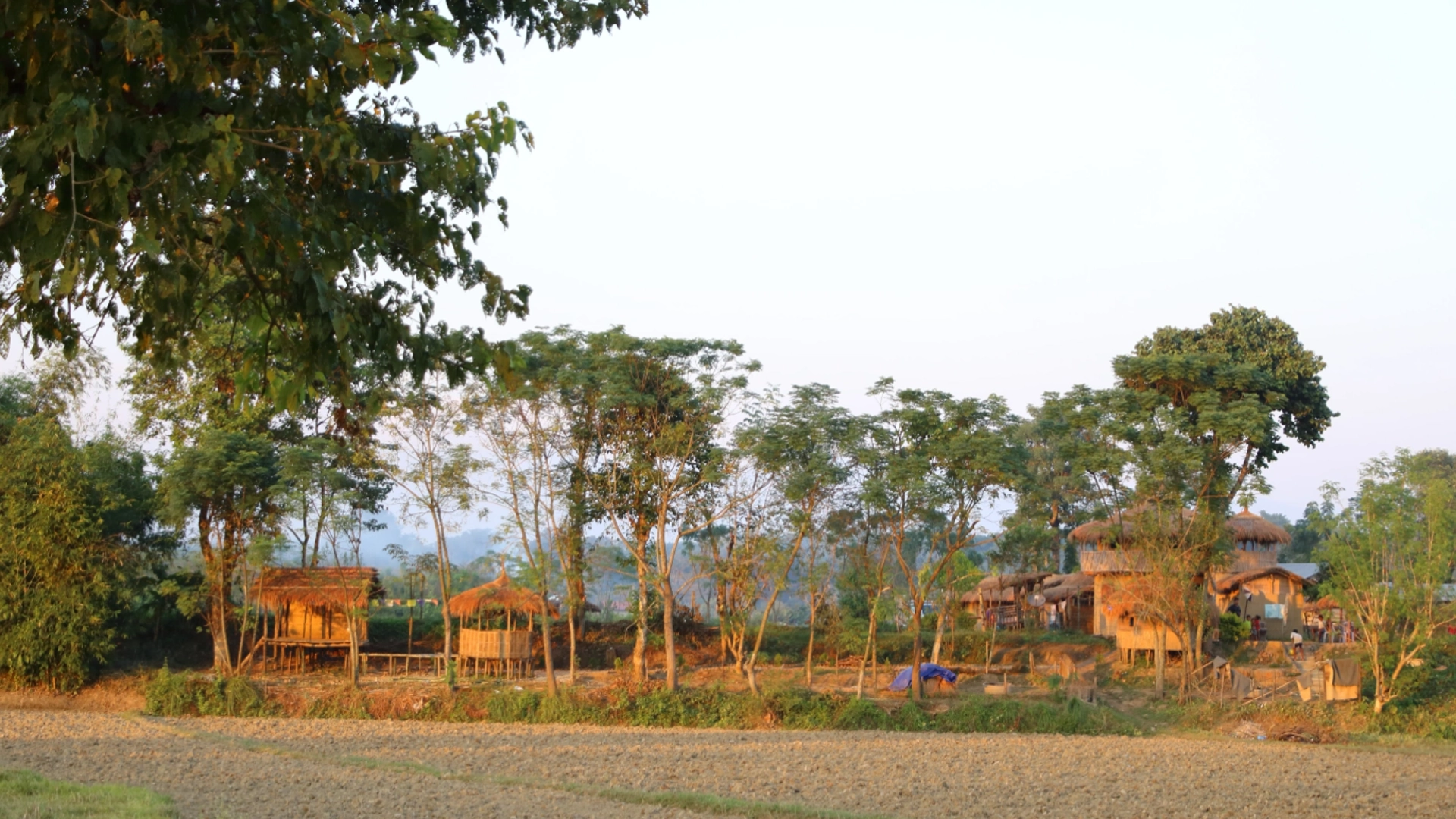
Natural farming ideas travel fast today. Videos, books, and success stories cross borders easily. What travels less easily are conditions. Climate, labor availability, land size, markets, and daily pressures differ sharply from place to place. This is why learning natural farming in Indian conditions needs a different grounding than learning it from foreign models.
At Terragaon Farms in Birbhum, West Bengal, many of our early lessons came from unlearning what did not fit. Methods that worked elsewhere behaved differently here. Not because they were wrong, but because context changes outcomes. This pillar grounds natural farming learning in Indian realities and explains why adaptation matters more than imitation.
In short:
Natural farming succeeds in India when methods are shaped around local climate, labor, land size, and markets rather than copied wholesale from external models.
Climate shapes everything, whether we admit it or not
Indian farming operates under high climatic variability.
Monsoon timing shifts. Rainfall arrives in bursts rather than gentle cycles. Heat stress affects both crops and animals. Humidity drives disease pressure. Dry spells interrupt growth unexpectedly.
Many natural farming models assume predictable seasons and mild temperatures. Under Indian conditions, soil cover, water management, and crop timing require constant adjustment. Learning must include how to respond to stress, not only how to grow during ideal weeks.
Ignoring climate reality leads to frustration. Working with it builds resilience.
Labor realities define what is sustainable
Labor is the most underestimated constraint in Indian natural farming.
Family labor is limited. Migration affects availability. Hiring help is uncertain and costly. Systems that demand daily intensive tasks often collapse quietly.
Learning must prioritize labor efficiency and routine stability. Practices that look elegant but require constant attention often fail on small farms. What survives are systems that tolerate occasional delays and human fatigue.
Natural farming in India must fit human limits, not test them.
Land size changes learning priorities
Most Indian farms are small and fragmented.
On small land, mistakes are visible immediately. There is little buffer for trial and error. This changes how learning should be approached. Small experiments matter more. Observation becomes critical. Expansion must wait for stability.
Foreign models often assume large contiguous land where errors can be absorbed. In India, learning must protect livelihoods first.
Small land does not reduce ambition. It sharpens focus.
Market realities cannot be ignored
Markets influence farming decisions even in natural systems.
Local demand, price volatility, transport access, and trust networks shape what crops and products are viable. Premium pricing for chemical-free produce exists in some pockets but cannot be assumed everywhere.
Learning natural farming in India must include market literacy. Producing well without selling wisely leads to financial stress. Models that rely on distant or idealized markets often fail locally.
Sustainability includes income stability, not just ecological ideals.
Why foreign models often fail locally
Foreign natural farming models usually fail in India for structural reasons.
They assume stable weather, mechanized support, consistent labor, and predictable markets. They often rely on inputs or tools not easily available locally. Cultural food preferences differ. Crop choices do not translate directly.
This does not mean foreign ideas have no value. It means they must be filtered carefully. Principles travel well. Practices require translation.
Learning should ask why a method works before asking how to copy it.
Regional adaptation is not optional
India is not one farming region.
Lateritic soils behave differently from alluvial soils. Dryland systems differ from irrigated belts. Eastern India faces different pest and moisture dynamics than western regions. Livestock breeds adapt differently across climates.
Learning natural farming must include regional observation and local adjustment. Advice that ignores geography creates disappointment.
Adaptation is not dilution. It is intelligence.
What grounded learning looks like in practice
Grounded learning starts with local observation.
Understanding soil behavior across seasons. Watching how crops respond to heat and moisture stress. Adjusting inputs slowly. Choosing crops that fit local diets and markets. Building systems that match available labor.
This approach feels slower initially. Over time, it proves more reliable.
Why reality-based learning builds authority
Authority in farming does not come from certainty. It comes from alignment with reality.
Farmers trust advice that acknowledges constraints. Learners progress faster when expectations are realistic. Systems last longer when built on local truth.
At Terragaon Farms, credibility grew when we spoke honestly about limits as well as successes. This honesty attracts serious learners and filters out unrealistic expectations.
Final thoughts
Learning natural farming in Indian conditions is not about rejecting external knowledge. It is about grounding learning where feet touch soil.
Climate, labor, land size, and markets are not inconveniences. They are the framework within which farming happens. Ignoring them leads to fragile systems. Respecting them builds resilience.
Natural farming works in India when learning begins with reality and adapts patiently from there. Methods change. Principles endure. Context decides success.

Krittika Das is a field practitioner and primary author at Terragaon Farms in Birbhum, West Bengal. Her writing is grounded in daily farm work, long-term soil observation, and small-land realities of eastern India. She focuses on natural farming, soil ecology, ethical dairy, and low-input systems, translating field experience into clear, practical knowledge for farmers and conscious food consumers.