
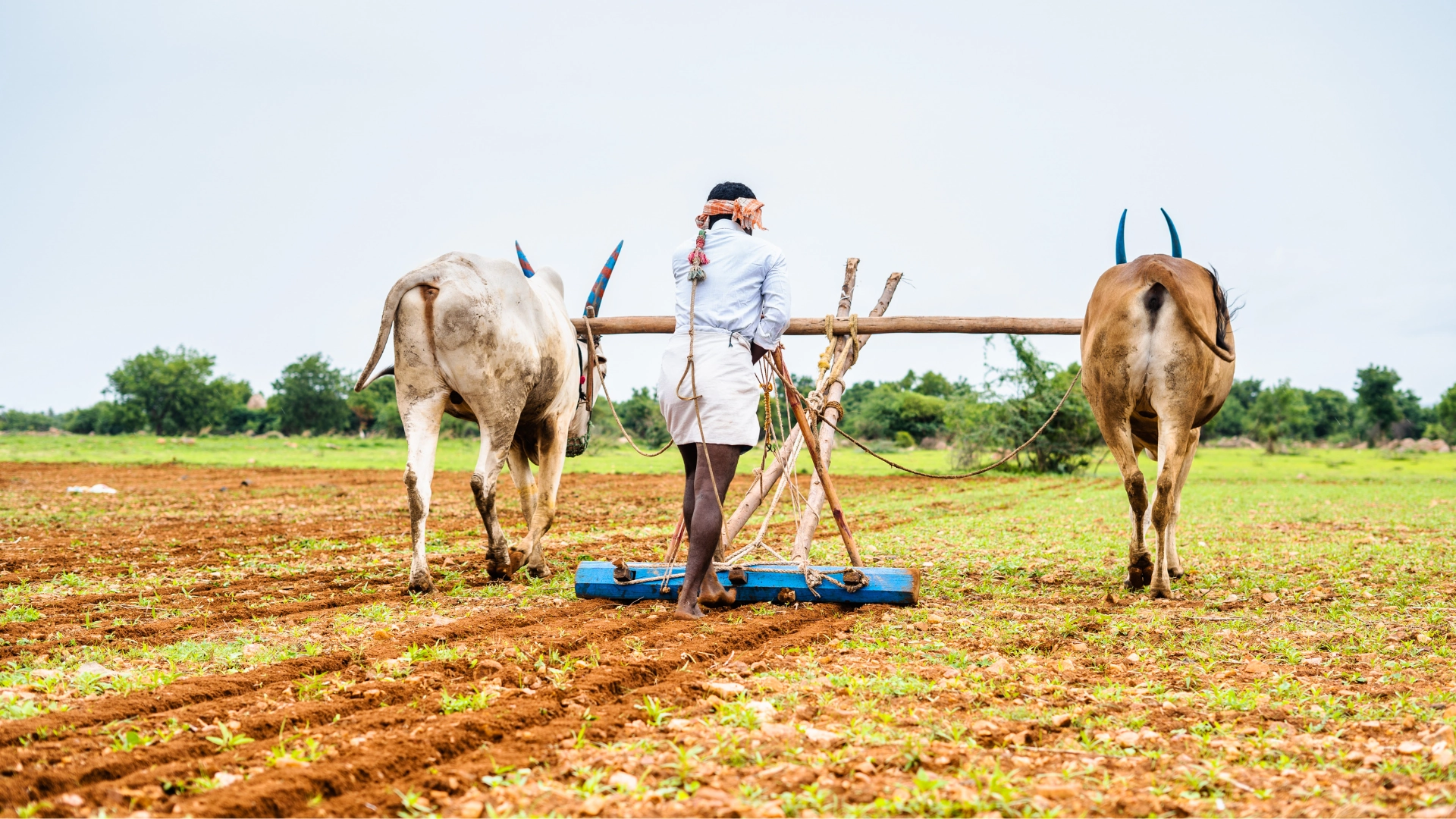
Reading builds understanding. Practice builds judgement. In natural farming, the gap between the two is where most beginners struggle. They know what should work, but they do not yet know how their own land responds. Small experiments are the safest and fastest way to close that gap.
At Terragaon Farms in Birbhum, West Bengal, almost every improvement we trust today began as a small, contained trial. Not because we lacked confidence, but because biological systems reward careful learning. This pillar explains why learning through practice matters, how to design safe experiments, and how observation turns trial into progress.
In short:
Small experiments allow you to learn how your soil, crops, and climate behave without risking the entire farm. They turn uncertainty into information.
Why practice teaches what reading cannot
Natural farming is context-dependent. The same method behaves differently across soils, seasons, and labour realities. Reading provides principles. Practice reveals limits.
Practice exposes timing errors, moisture behaviour, pest dynamics, and labour load in ways no guide can predict. When results differ from expectations, the difference itself becomes the lesson.
Learning accelerates when the feedback is real and immediate.
What “small experiments” actually mean
A small experiment is not casual guessing. It is a deliberate, limited test with clear boundaries.
It may be one bed with mulch while another remains bare. One crop with compost while another receives none. One plot with reduced tillage while the rest stays unchanged.
The goal is comparison, not perfection. Size is kept small so mistakes remain affordable and lessons remain clear.
Why safe failure is essential
Failure is not the opposite of learning. It is the mechanism.
Small experiments create safe failure. When a trial goes wrong, the cost is limited. The information gained is valuable. Confidence increases because the system was protected.
Avoiding failure entirely leads to rigid behaviour. Embracing controlled failure builds adaptability.
On small farms, adaptability is more valuable than certainty.
Observation turns trials into understanding
An experiment without observation is just activity.
Observation includes watching soil moisture after rain, plant posture at midday, insect presence, weed behaviour, and labour effort required. These signals explain why outcomes occurred.
Writing brief notes helps, but attention matters more. Over time, patterns emerge. Decisions become faster and calmer.
Observation converts experience into knowledge.
What beginners often get wrong about experimentation
Many beginners test too many variables at once. Multiple inputs, multiple crops, multiple changes. When results appear, the cause is unclear.
Others expand trials too quickly, applying untested changes across the farm. When results disappoint, recovery becomes difficult.
Effective experimentation changes one thing at a time and waits long enough to see response.
Designing experiments for small land
On small land, experiments must respect constraints.
Choose changes that affect soil health, water behaviour, or labour efficiency first. Avoid high-cost inputs. Avoid crops with narrow margins early on.
Define a simple question before starting. For example, does mulch reduce irrigation frequency on this soil. Does reduced tillage affect weed pressure over one season.
Clear questions produce useful answers.
Measuring progress without chasing yield
Yield is a late indicator. Early learning shows up elsewhere.
Improved soil structure, slower moisture loss, fewer emergency interventions, and clearer decision making indicate progress. These signs appear before yield changes.
Chasing yield too early masks learning signals.
When to repeat and when to adjust
Not every experiment needs repetition. Clear failures teach limits. Clear successes can be repeated cautiously.
Ambiguous results deserve patience. Seasonal variation matters. Repeating an experiment across another season often clarifies what weather obscured.
Adjustment should be slow and intentional, not reactive.
From experiments to systems
As confidence grows, experiments link together.
A successful mulching trial informs compost use. Compost stability supports reduced tillage. Reduced tillage improves moisture retention. Over time, individual trials merge into a coherent system.
This progression feels organic because it is built on understanding, not imitation.
Final thoughts
Learning through practice is not about speed. It is about direction.
Small experiments protect the farm while expanding knowledge. Safe failure builds resilience. Observation turns effort into insight.
At Terragaon Farms, progress came not from copying methods but from testing them gently and listening carefully to results. Natural farming does not reward those who rush. It rewards those who learn steadily, one small experiment at a time.

Krittika Das is a field practitioner and primary author at Terragaon Farms in Birbhum, West Bengal. Her writing is grounded in daily farm work, long-term soil observation, and small-land realities of eastern India. She focuses on natural farming, soil ecology, ethical dairy, and low-input systems, translating field experience into clear, practical knowledge for farmers and conscious food consumers.