
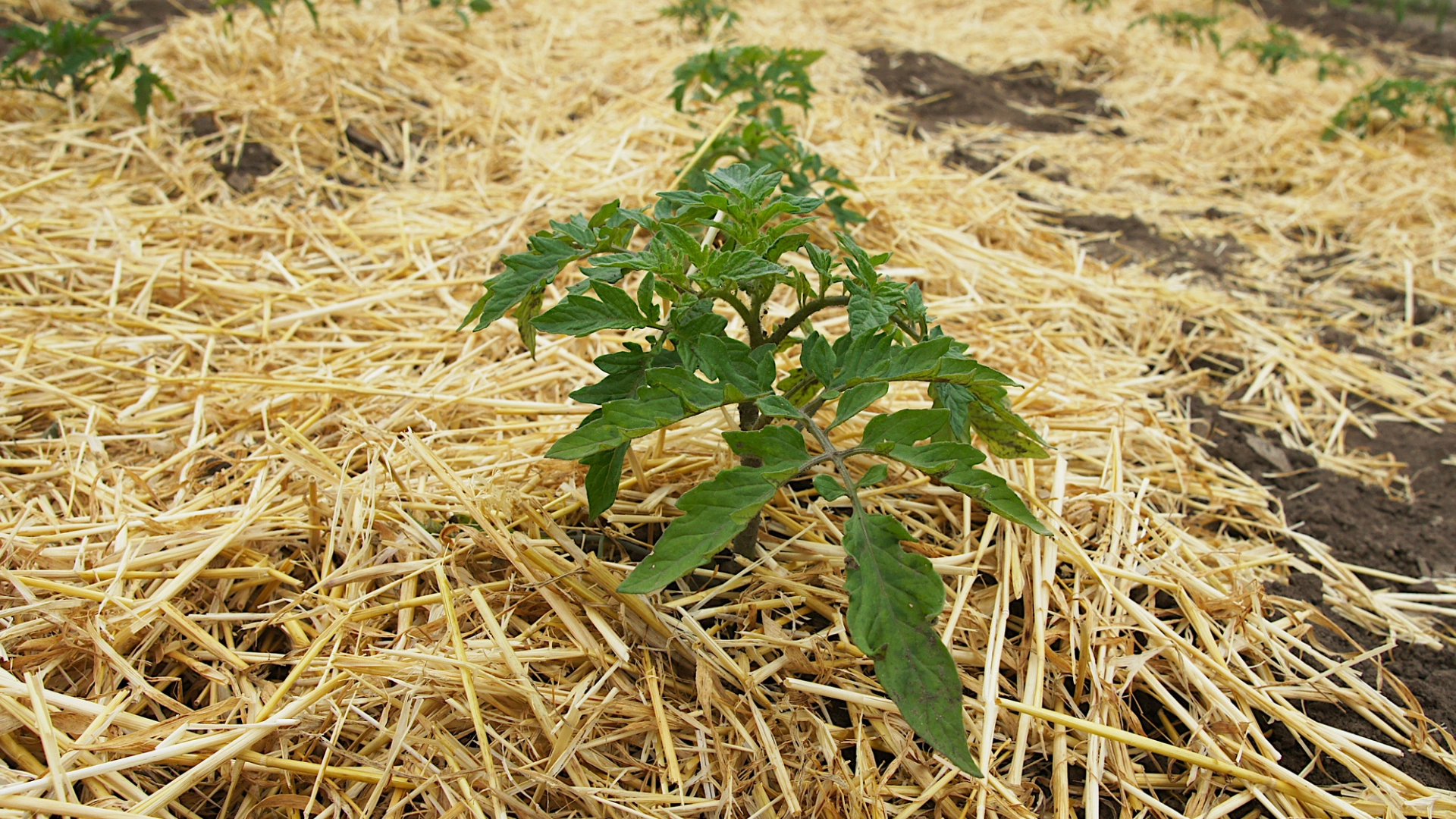
Many farmers apply mulch and then wait for dramatic results within days. When soil still looks the same after a week or two, doubt sets in. Mulching gets dismissed as slow or ineffective. In reality, mulch works on soil in stages, not instantly, and each stage shows up differently in the field.
At Terragaon Farms in Birbhum, West Bengal, we learned to judge mulching by observing soil behavior over weeks, months, and seasons. Once expectations matched biological reality, mulching became one of the most reliable tools for soil recovery on small farms.
This article explains how long mulch actually takes to change soil structure under Indian conditions, and what farmers should realistically expect at each stage.
What soil structure really means on the farm
Soil structure is not about softness alone. It refers to how soil particles bind into aggregates, how pores hold air and water, and how roots move through the profile.
Good structure allows water to enter quietly, roots to grow deeper, and microbes to survive stress. Poor structure leads to crusting, runoff, compaction, and shallow roots.
Mulch affects structure indirectly by changing the environment in which soil biology operates.
What changes in the first few weeks after mulching
Within the first one to three weeks, mulch mainly reduces stress.
Soil temperature stabilizes. Direct sun no longer hits the surface. Moisture loss slows. Even without decomposition, soil becomes less harsh for microbes and roots.
Farmers often notice that soil under mulch stays cooler and slightly moist while nearby bare soil dries and hardens. This is not structural change yet, but it is the foundation for it.
At this stage, expecting crumbly soil is unrealistic. What matters is reduced damage.
What changes after one to two months
Between four and eight weeks, biological activity begins to increase if moisture is adequate.
Microbes start breaking down the lower layer of mulch. Earthworms may appear if conditions allow. Fine roots explore the topsoil more actively.
Soil begins to lose its tendency to seal after light rain. Infiltration improves slightly. Aggregates start forming but remain fragile.
This stage is often when farmers begin to feel mulching is working, though the change is still subtle.
What changes over one full season
After one cropping season, usually three to four months, soil structure changes become clearer.
Aggregates hold better when handled. Surface crusting reduces significantly. Roots penetrate deeper. Moisture retention improves between irrigations.
In monsoon conditions, runoff decreases. In dry periods, soil stays workable longer.
This is the stage where mulching shifts soil from fragile to functional, provided soil is not disturbed repeatedly.
What changes after multiple seasons
True structural transformation takes time.
After two to three seasons of continuous mulching combined with reduced disturbance, soil develops stable aggregation. Fungal networks establish. Organic matter begins to accumulate in protected forms.
At this stage, soil behaves differently even without mulch temporarily. It absorbs water faster, resists compaction, and supports resilient root systems.
This is not fast, but it is durable.
Why some farmers see no improvement
Mulching fails when expectations are misaligned or when other practices cancel its effect.
Removing mulch too early exposes soil during the most vulnerable period. Frequent ploughing breaks aggregates faster than mulch can rebuild them. Very thin mulch layers dry out and decompose without protection effect.
Mulch needs continuity. Interruption resets progress.
Climate and soil type matter
In hot regions, mulch impact appears faster because stress reduction is immediate. In cooler or very dry periods, decomposition slows but protection still matters.
In red and lateritic soils, mulching is especially effective because it prevents surface sealing and particle dispersion. Structural improvement here is often more visible than in heavier soils.
Soil type influences speed, but the sequence remains the same.
Mulch versus compost for structure building
Mulch protects structure first. Compost strengthens structure later.
Compost adds organic matter, but without surface protection, aggregates break down quickly. Mulch creates the environment in which compost carbon becomes stable.
This is why combining both works best, but starting with mulch delivers faster functional improvement.
How farmers should measure progress
Do not measure progress by yield alone.
Observe infiltration after rain. Check whether soil stays friable after drying. Pull plants and examine root spread. Note changes in weed species and earthworm presence.
These indicators change before harvest numbers do.
Common mistakes about mulching timelines
Expecting visible change in days leads to disappointment. Stopping mulch once crops establish exposes soil again. Using mulch only during one season limits benefits.
Mulching works when treated as a system practice, not a seasonal experiment.
Final thoughts
How long mulch takes to change soil structure depends on what is meant by change.
Stress reduction happens in weeks. Functional improvement happens in months. Structural stability develops over seasons.
At Terragaon Farms, the biggest shift happened when we stopped asking how fast mulch works and started asking how consistently we could protect soil. Once protection became continuous, soil responded steadily and predictably.
For small farmers in India, mulching is not a quick fix. It is a patient investment that pays back through resilience rather than instant results.

Krittika Das is a field practitioner and primary author at Terragaon Farms in Birbhum, West Bengal. Her writing is grounded in daily farm work, long-term soil observation, and small-land realities of eastern India. She focuses on natural farming, soil ecology, ethical dairy, and low-input systems, translating field experience into clear, practical knowledge for farmers and conscious food consumers.