Small farmers often ask a very practical question. If time, labor, and money are limited, should effort go into mulching the field or making compost first. Both are promoted as essential for soil health, but they do not work in the same way or at the same speed.
At Terragaon Farms in Birbhum, West Bengal, we have used both approaches across seasons. The difference between mulching and compost becomes clear only when soil behavior is observed closely, not just crop response. This article explains which improves soil faster on small farms and why, under Indian conditions.
What mulching actually does to soil
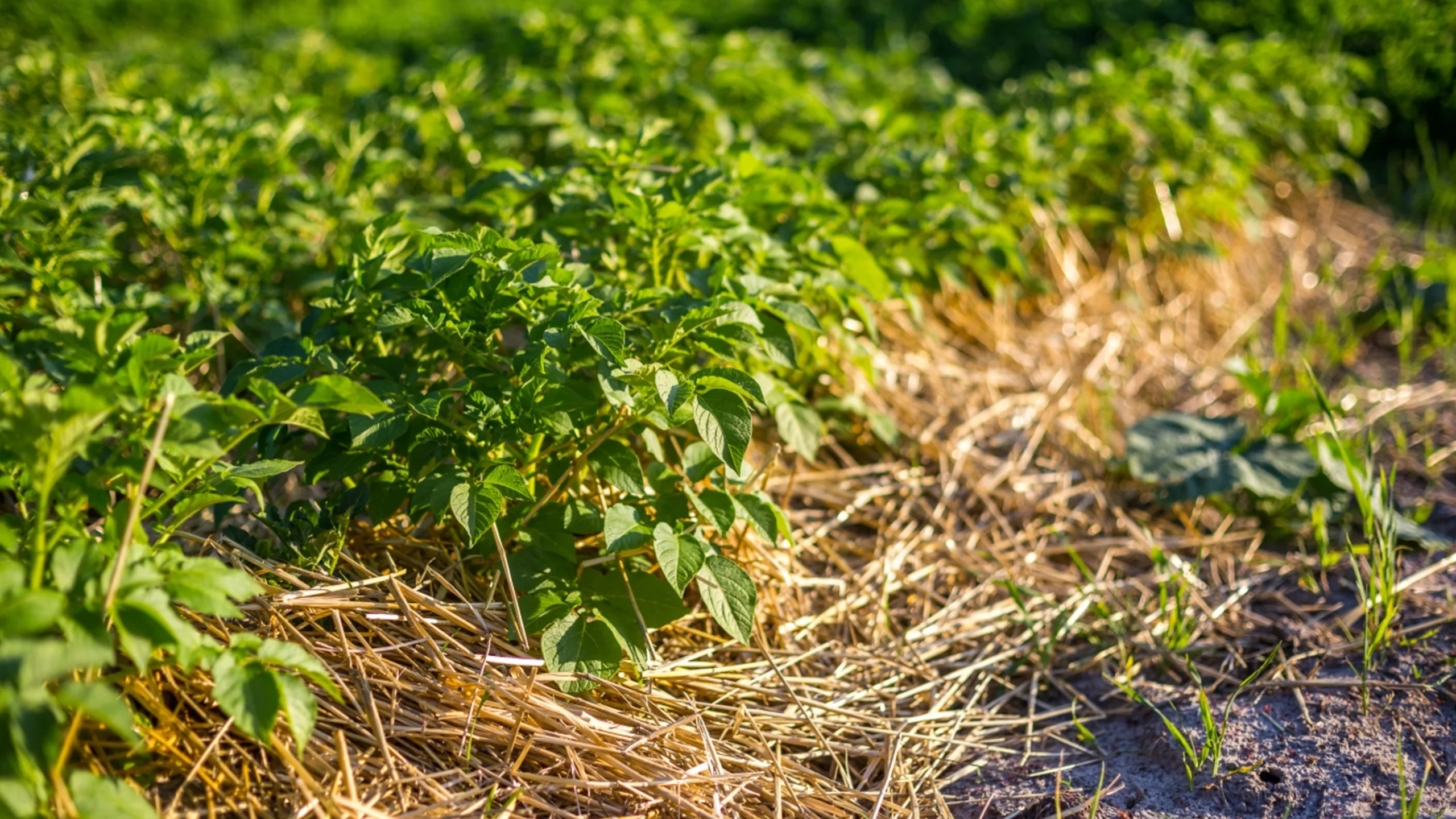
Mulching means covering the soil surface with organic material such as straw, dry leaves, crop residue, or grasses. Its impact begins immediately.
The first change is physical. Soil temperature stabilizes. Direct sun no longer hits the surface. Moisture loss reduces sharply. Even before decomposition starts, soil stress decreases.
The second change is biological. Mulch creates a protected habitat where microbes, insects, and earthworms can function without extreme heat or drying. As mulch slowly breaks down, carbon enters the soil gradually, right where roots and microbes interact most.
On small farms, this protection effect is often more important than nutrient addition.
What compost actually does to soil
Compost is decomposed organic matter applied to soil as an amendment. It supplies nutrients, beneficial microbes, and some stable organic carbon.
Compost works best when incorporated into soil or applied around plants. Its effect is strongest in nutrient deficient or biologically depleted soils.
However, compost does not protect the soil surface. Without cover, composted soil can still overheat, dry out, or compact. Its benefits are real but localized and slower to influence overall field structure.
Compost improves soil quality. Mulch improves soil function.
Speed matters on small farms
On small farms, improvement speed matters because farmers cannot wait multiple seasons for visible change.
Mulching shows results within weeks. Soil stays moist longer. Surface hardness reduces. Roots penetrate more easily. Weeds change character. These changes happen even if nutrient levels remain the same.
Compost works over months. It improves fertility gradually and supports long term organic matter build up, but early signs are less visible unless soil was severely depleted.
This is why many farmers feel mulching works faster, even though compost is equally important over time.
How mulching affects moisture and structure first
In Indian climates with strong sun and erratic rainfall, moisture management is critical. Mulch directly reduces evaporation and erosion.
When moisture stabilizes, microbes survive longer. When microbes survive, aggregation improves. When aggregation improves, roots grow deeper. This chain reaction starts with surface protection.
Compost alone cannot start this chain if soil remains exposed.
This is especially important in red lateritic soils, where surface sealing and rapid drying are common problems.
Nutrients versus environment
Compost provides nutrients and microbial inoculation. Mulch provides environment.
Without a favorable environment, nutrients are wasted. Without nutrients, environment alone cannot sustain crops long term.
On small farms, environment usually collapses first. That is why mulching often delivers faster visible improvement.
Labor and material reality on small farms
Mulching often uses materials already present on the farm. Crop residues, weeds, leaves, or straw can be applied directly.
Composting requires collection, turning, moisture management, and time. This is valuable work but not always feasible during peak seasons.
For families managing farming alongside other responsibilities, mulching fits more easily into daily routines.
What we observed at Terragaon Farms
When we started protecting soil with continuous mulch, soil behavior changed before compost quantities increased.
Water infiltration improved. Earthworms returned. Root systems deepened. Compost applied later worked better because soil conditions had improved.
When compost was applied without mulch in earlier seasons, benefits were visible but limited and temporary.
This sequence taught us an important lesson. Protect first, enrich second.
Which improves soil faster on small farms
For speed of improvement, mulching wins.
It reduces stress immediately, stabilizes moisture, and allows biology to recover. Compost strengthens fertility and organic matter over time, but needs protection to perform fully.
On small farms, mulching creates the conditions that allow compost to work better.
The best practical sequence for small farmers
Start with mulching wherever possible. Use available organic material generously. Reduce soil disturbance. Observe moisture and root behavior.
Add compost gradually as labor and material allow. Apply it near root zones or before planting.
Over time, use both together. Mulch for protection. Compost for nutrition.
This combined approach aligns with natural farming on small land systems discussed in our detailed guide on natural farming on small land at
/natural-farming-on-small-land/
Common mistakes farmers make
Expecting compost to fix exposed soil leads to disappointment. Removing residues while applying compost cancels benefits. Stopping mulch once crops establish exposes soil during the most vulnerable period.
Soil improvement fails when practices are isolated instead of layered.
Final thoughts
Mulching and compost are not competitors. They play different roles.
On small farms under Indian conditions, mulching improves soil faster because it restores function first. Compost builds strength once function returns.
At Terragaon Farms, soil began responding when we stopped asking which input to add and started asking how to reduce stress on soil. Protection came first. Enrichment followed naturally.
For farmers with limited resources, that sequence makes the difference between visible progress and repeated frustration.

Krittika Das is a field practitioner and primary author at Terragaon Farms in Birbhum, West Bengal. Her writing is grounded in daily farm work, long-term soil observation, and small-land realities of eastern India. She focuses on natural farming, soil ecology, ethical dairy, and low-input systems, translating field experience into clear, practical knowledge for farmers and conscious food consumers.