Dairy farming in India is usually discussed in numbers. Liters per day. Fat percentage. Feed conversion. Breed comparison. On small farms, this way of thinking quietly breaks families, animals, and land.
At Terragaon Farms in Birbhum, West Bengal, dairy became sustainable only when we stopped treating it as a milk-producing unit and started treating it as a living system. Soil, fodder, cows, labor, water, climate, and cash flow are not separate departments on a small farm. They move together. When one part is stressed, the entire system begins to fail.
This guide explains natural dairy farming in India as it actually works on small farms, under real economic, climatic, and biological constraints.
What natural dairy farming really means in the Indian context
Natural dairy farming is not dairy without chemicals alone. It is dairy that fits into a low-input, locally adapted farm system where animals are supported by the land rather than isolated from it.
In practice, this means indigenous cows, farm-grown fodder, minimal dependence on purchased feed, ethical animal care, and integration with crop farming. Milk production matters, but it is never separated from soil health, water use, labor capacity, or household economics.
On small farms, this distinction decides whether dairy survives beyond a few seasons.
Why dairy fails on small farms despite good milk yield
Many small farmers produce reasonable milk volumes and still lose money. The failure is not technical. It is systemic.
High milk yield often comes with high recurring costs. Purchased feed, veterinary interventions, labor fatigue, water stress, and infrastructure loans quietly eat into margins. Over time, the farmer becomes trapped in daily output without long-term stability.
Natural dairy farming reverses this logic. It prioritizes stability over peak output. Costs become predictable. Stress reduces. Dairy continues even when conditions are unfavorable.
This is not a compromise. It is a survival strategy.
Indigenous cows as the backbone of small-farm dairy
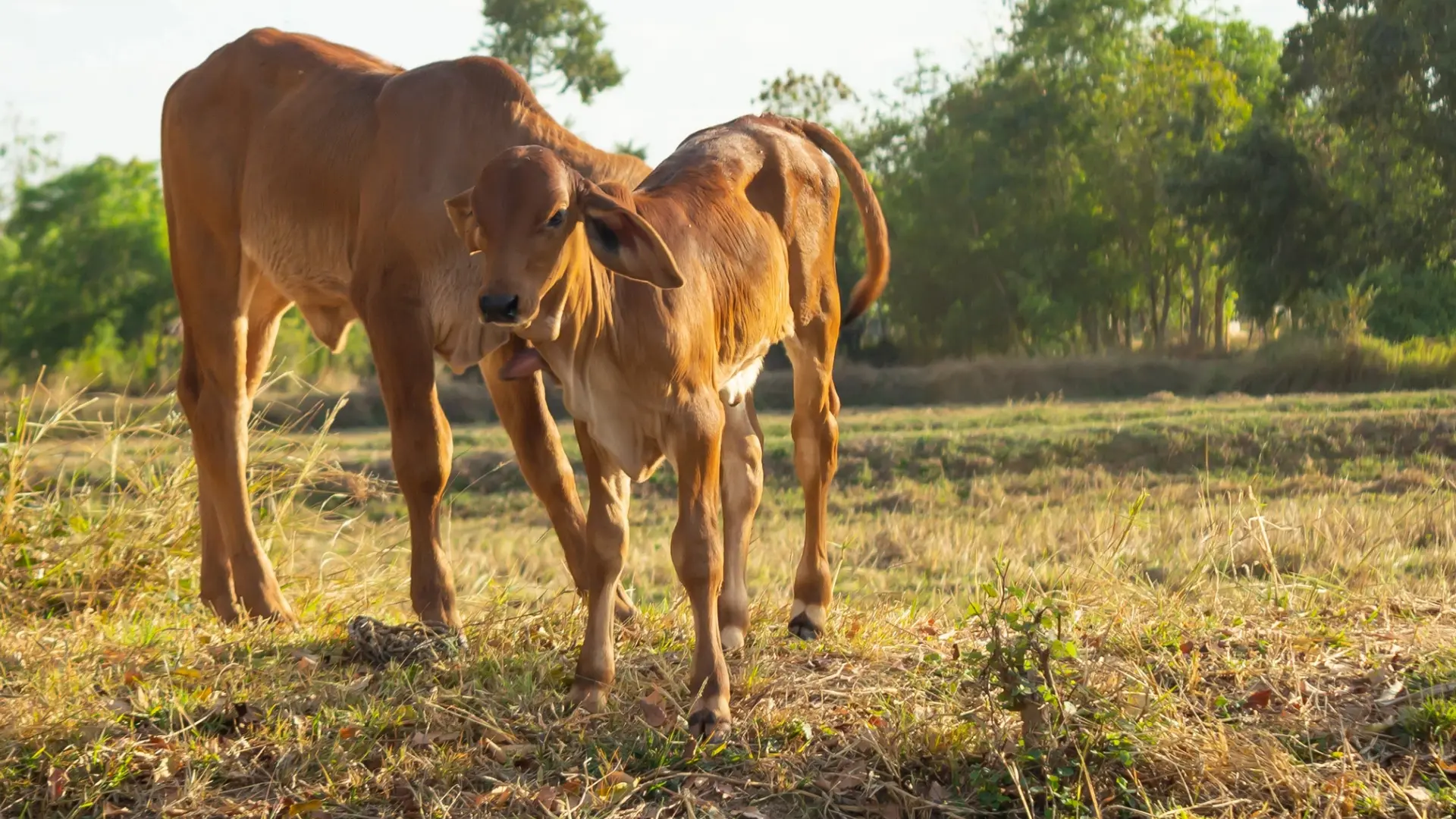
Indigenous cows evolved under Indian climate, fodder availability, and disease pressure. They tolerate heat better, manage on local feed, and generally require fewer medical interventions.
Their milk yield is moderate, but their overall system compatibility is high. On small farms, this compatibility matters more than maximum output.
Indigenous cows also support soil fertility through dung and urine, closing nutrient loops between crops and livestock. This multi-function role is often ignored when comparisons focus only on liters.
A deeper discussion on breed suitability is covered in our detailed guide on indigenous cows for small farms at
/indigenous-cow-breeds-small-farms/
Feed and fodder decide dairy economics
Feed is the single largest cost in Indian dairy farming.
Natural dairy systems reduce this cost by shifting the foundation of feeding to the farm itself. Crop residues, fodder crops, grasses, tree leaves, and seasonal planning replace heavy dependence on purchased concentrates.
Purchased feed becomes a supplement, not the base.
At Terragaon Farms, veterinary issues reduced when fodder planning improved. Nutrition and health are inseparable, especially under small-farm conditions.
Animal health through system design, not constant treatment
In commercial systems, animal health is often reactive. Disease appears. Medicine follows. Costs spike.
Natural dairy emphasizes prevention through reduced stress, adequate nutrition, clean living conditions, and manageable workloads for animals. Lower stress leads to lower disease incidence. Fewer emergencies protect cash flow.
This is one reason why A2 milk profitability on small farms often appears modest but stable when analyzed over multiple years rather than short periods. A detailed economic breakdown is available here
/a2-milk-profitability-small-farms/
Milk yield versus net income on small farms
High milk yield does not guarantee profitability.
On small farms, higher yield often increases costs faster than income. Feed, water, labor, and health expenses rise together. Net income remains fragile.
Natural dairy systems accept moderate yield in exchange for lower and predictable costs. Net income becomes steadier. Risk reduces. Families remain engaged in farming rather than exhausted by it.
This is an economic reality, not an ideological position.
Integration with natural farming systems
Natural dairy works best when integrated with natural farming on small land.
Dung supports composting and soil biology. Crop residues support fodder needs. Fields benefit from organic matter. Waste becomes input.
This integration reduces expenses across the entire farm, not just within dairy. The broader integration logic is explained in our guide on natural farming on small land at
/natural-farming-on-small-land/
Labor realities and family-managed dairy
Small farms rely heavily on family labor. Systems that demand constant attention, night emergencies, or heavy manual work break families over time.
Natural dairy systems are labor intensive but predictable. Routines stabilize. Emergencies reduce. Work becomes manageable rather than chaotic.
A system that exhausts the family is not sustainable, even if it looks profitable on paper.
Market access and selling milk realistically
Most small farms do not benefit from distant markets.
Natural dairy works best with local sales, known customers, and consistent daily distribution. Trust replaces certification at this scale, though transparency remains essential.
Premium pricing for A2 milk is possible in some regions, but it should never be assumed. Markets differ widely. Overinvestment based on assumed premiums often leads to loss.
Research-aligned and future-facing perspective
Agricultural research increasingly supports low-input, resilient dairy systems for small and marginal farmers. Policy discussions now emphasize sustainability, animal welfare, and climate adaptation rather than yield maximization alone.
Natural dairy aligns well with this direction when practiced honestly and locally, without exaggeration or shortcuts.
Final thoughts
Natural dairy farming in India is not about rejecting modern knowledge. It is about applying biological and economic logic to real farm conditions.
On small farms, success comes from systems that absorb stress rather than amplify it. Indigenous cows, local fodder, integrated farming, and ethical care create that resilience.
At Terragaon Farms, dairy became sustainable only when we stopped chasing numbers and started building balance. For small farms, balance is not compromise. It is survival.

Krittika Das is a field practitioner and primary author at Terragaon Farms in Birbhum, West Bengal. Her writing is grounded in daily farm work, long-term soil observation, and small-land realities of eastern India. She focuses on natural farming, soil ecology, ethical dairy, and low-input systems, translating field experience into clear, practical knowledge for farmers and conscious food consumers.