
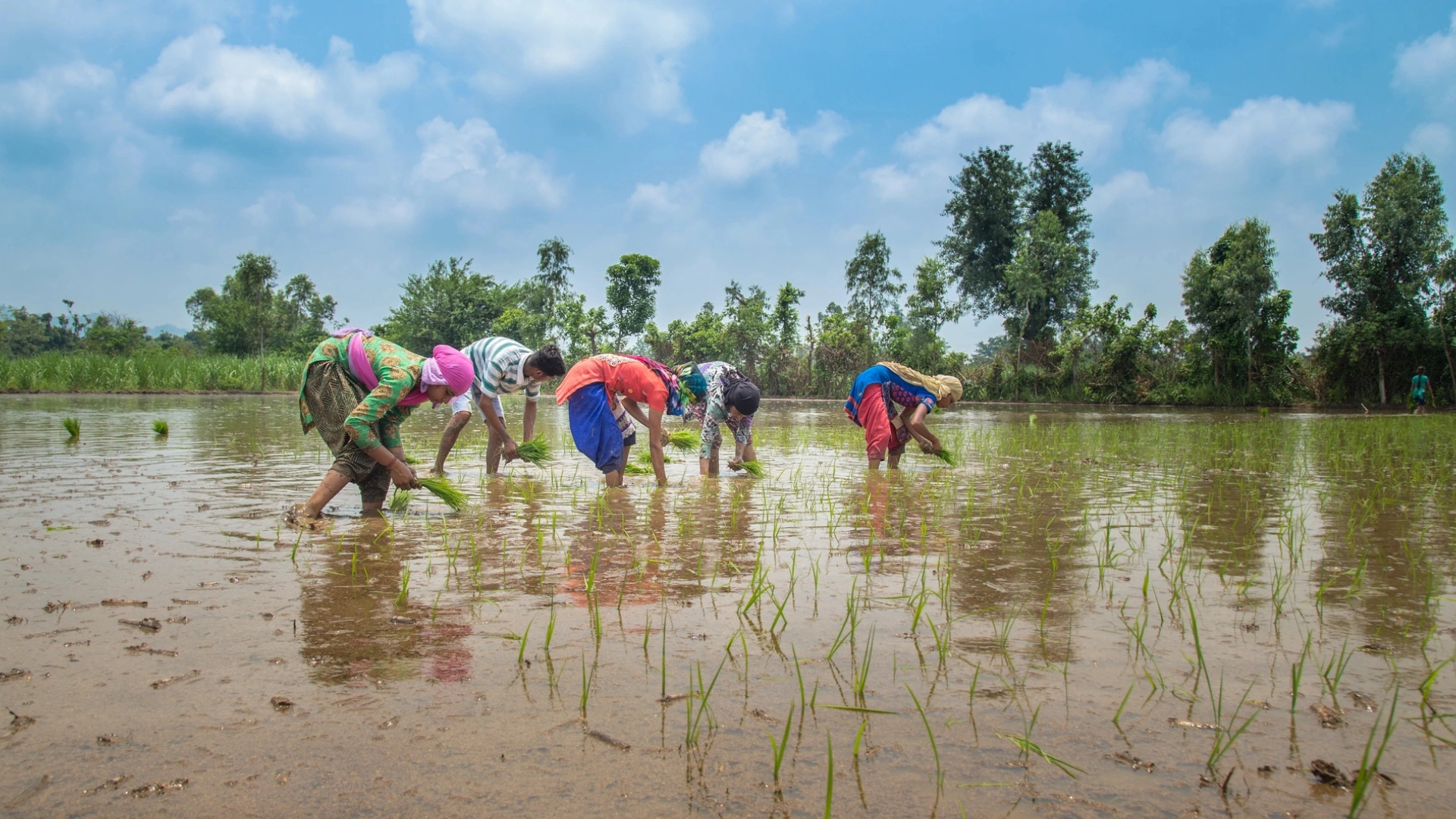
Something has quietly changed in Indian agriculture.
Across villages, farmers are asking different questions than they did a decade ago. Not how much fertiliser to apply, but why soil no longer smells alive. Not which pesticide works faster, but why pests return stronger every season. These questions do not come from ideology. They come from lived exhaustion.
At Terragaon Farms in Birbhum, West Bengal, natural farming did not begin as a movement or belief system. It began as a practical necessity. The land was getting harder. Costs were rising. Food quality was declining. The existing system was no longer stable.
This pillar explains natural farming in India as it actually works on the ground, under real soil, climate, labour, and cost constraints, without romanticism and without shortcuts.
What natural farming really means in India
Natural farming is often simplified as farming without chemicals. That description is incomplete.
Natural farming is a regenerative agricultural system that works with living soil biology, local resources, and ecological balance to grow crops without dependence on synthetic fertilisers, pesticides, or externally purchased substitutes.
In the Indian context, natural farming means aligning agriculture with native soils, indigenous livestock, monsoon patterns, and small farm economics. It is not about replacing chemical inputs with expensive organic inputs. It is about removing unnecessary dependency altogether.
At its core, natural farming shifts the central question. Instead of asking what to add to the field, it asks what practices are damaging the soil’s ability to function on its own.
Why natural farming is re-emerging across India
Indian agriculture today faces three interconnected pressures.
The first is soil exhaustion. Decades of intensive chemical use have reduced organic matter, compacted soil, and weakened microbial life. Many fields now require increasing inputs just to maintain previous yields.
The second is cost pressure. Fertilisers, pesticides, seeds, diesel, and labour costs rise steadily while crop prices remain unpredictable. For small and marginal farmers, this imbalance creates chronic financial stress.
The third is declining food quality. Crops grown in biologically weakened soil often lack flavour, resilience, and mineral density. Yield may persist, but nourishment declines.
Natural farming addresses all three by rebuilding soil biology, reducing recurring costs, and restoring the natural relationship between soil health and food quality.
Core principles that define natural farming
Natural farming is not a collection of isolated techniques. It is a system built on a few interdependent principles.
Living soil comes first. Healthy soil contains diverse microorganisms that make nutrients available, improve structure, and regulate moisture.
External inputs are minimized. Fertilisers and pesticides are replaced by biological processes and on-farm resources rather than purchased substitutes.
Soil disturbance is reduced. Excessive ploughing damages soil structure, fungal networks, and moisture retention.
Organic matter stays on the land. Crop residues, leaf litter, and organic waste are returned to the soil rather than removed or burned.
Diversity replaces uniformity. Mixed cropping, rotations, and ecological diversity reduce pest pressure and improve resilience.
Removing any one of these weakens the entire system.
How natural farming works in real practice
Indigenous cow based microbial inputs
Traditional natural farming in India often uses preparations derived from indigenous cow dung and urine. These are not fertilisers. They are microbial inoculants.
Preparations such as jeevamrit, ghanjeevamrit, and beejamrit stimulate soil microbial activity and protect seedlings during early growth. Their effectiveness depends on soil moisture, organic matter, and consistent application rather than volume.
At Terragaon Farms, these inputs are prepared fresh in small batches and used during active growing periods. Stored or overly concentrated applications are avoided because microbial vitality matters more than quantity.
Mulching as a foundational practice
Mulching is one of the most powerful and underestimated practices in natural farming.
Covering soil with crop residues, dry leaves, straw, or cut weeds protects it from heat, reduces evaporation, suppresses weeds, and feeds microorganisms as it decomposes.
Bare soil overheats, dries quickly, and loses biological activity. Covered soil stays cooler, holds moisture, and recovers structure over time.
On small farms, mulching also reduces labour by lowering weeding and irrigation frequency.
Reduced tillage and soil protection
Frequent ploughing breaks soil aggregates, exposes organic matter to oxidation, and disrupts fungal networks that support nutrient movement.
Natural farming limits tillage to essential operations such as bed preparation or transplanting. Over time, soil develops better aggregation, deeper root penetration, and improved water infiltration.
This change does not show dramatic results in weeks. It compounds slowly and sustainably across seasons.
Pest management through ecological balance
Natural farming does not aim to eliminate insects. It aims to prevent imbalance.
Healthy plants grown in biologically active soil show better resistance to pest pressure. Crop diversity and border vegetation support natural predators that regulate insect populations.
When intervention is required, botanical preparations such as neem based sprays are used selectively rather than routinely.
At Terragaon Farms, pest pressure reduced as soil health and crop diversity improved. This shift came from system stability, not stronger sprays.
Natural farming versus organic and conventional systems
Organic farming often replaces chemical inputs with purchased organic inputs. Dependency remains, only the source changes.
Conventional farming focuses on yield maximization through external inputs.
Natural farming focuses on system resilience, cost control, and long term soil health.
For small farms, this distinction is critical. Predictable low costs often matter more than peak yield.
Benefits observed under real Indian conditions
Soil improves rather than degrades. Organic matter increases, earthworm activity returns, and water retention improves season after season.
Costs reduce significantly. Fertiliser and pesticide expenses decline. Seed saving becomes possible. Irrigation demand often reduces with improved soil structure.
Food quality improves. Vegetables develop deeper flavour and aroma. Grains show better texture. These changes reflect healthier soil rather than marketing claims.
Environmental impact reduces. Groundwater contamination declines. Biodiversity increases. Carbon remains stored in soil rather than released through repeated disturbance.
Animals are treated as part of the farm system rather than production tools, improving both ethics and sustainability.
Why natural farming suits regions like West Bengal
Regions such as Birbhum have red lateritic soils often considered poor. In practice, these soils respond strongly to organic matter addition and biological activation once chemical pressure is removed.
Seasonal rainfall, warm temperatures, and traditional knowledge support natural processes when inputs are reduced.
Natural farming here is not an imported idea. It is a recovery of practices adapted to local ecology.
Who can adopt natural farming
Natural farming is suitable for small farmers, beginners, and families seeking stable, low risk agriculture.
Large land, expensive infrastructure, or instant conversion is not required. Starting with a small plot and learning season by season is often more successful than full conversion.
Mistakes are part of the process. Soil biology recovers when given time and consistency.
Final thoughts
Natural farming in India is not anti science. It is applied ecological science grounded in real conditions.
The future of Indian agriculture does not lie in increasing dependency on inputs. It lies in rebuilding soil, reducing risk, and restoring balance between land, crops, animals, and people.
At Terragaon Farms, natural farming proved viable not because it promised higher yield, but because it restored stability. For small farms, stability is not a compromise. It is the foundation of survival and dignity.

Krittika Das is a field practitioner and primary author at Terragaon Farms in Birbhum, West Bengal. Her writing is grounded in daily farm work, long-term soil observation, and small-land realities of eastern India. She focuses on natural farming, soil ecology, ethical dairy, and low-input systems, translating field experience into clear, practical knowledge for farmers and conscious food consumers.