

Why Indian farmers are quietly returning to Natural Farming?
Something important has shifted in Indian agriculture. Walk through village markets today and you’ll hear conversations that were rare a decade ago -farmers exchanging jeevamrit recipes, talking about soil microbes, and comparing the taste of vegetables the way their parents once did. These are not nostalgic stories. They are survival strategies.
Across India, farmers are rediscovering natural farming not because it is fashionable, but because the old chemical-heavy system is no longer working—for the soil, for farm economics, or for human health.
At Terragaon Farms in Birbhum, West Bengal, we’ve experienced this shift firsthand. Natural farming didn’t begin here as an ideology. It began as a question:
How do we grow food without exhausting the land or ourselves?
The answers came from the soil.
What Is Natural Farming?
Natural farming is a chemical-free, regenerative farming system that grows crops by working with living soil ecosystems, using indigenous cow-based preparations, protecting soil through mulching, minimizing soil disturbance, and eliminating dependency on purchased external inputs.
In simple words, natural farming means letting nature do the work it already knows how to do—and stopping the practices that prevent it.
It is not about adding more.
It is about interfering less.
The Three Silent Crises in Indian Agriculture
Indian farming today faces challenges that rarely make headlines, but shape every meal we eat.
1. Soil Exhaustion
Decades of chemical fertilizers and pesticides have left soils compacted, biologically dead, and dependent on constant external inputs just to maintain yields.
2. Rising Input Costs
Seeds, fertilizers, pesticides, diesel—costs rise every year. For small and marginal farmers (who make up 86% of Indian agriculture), this has created an unsustainable debt cycle.
3. Nutritional Decline
Food grown on depleted soil lacks mineral density. We eat more calories but receive less nourishment. Taste, aroma, and vitality have faded.
Natural farming addresses all three—not by treating symptoms, but by restoring soil life, reducing costs to near zero, and producing genuinely nutritious food.
Instead of asking “What should we add?”
Natural farming asks “What should we stop damaging?”
The Five Core Principles of Natural Farming
Natural farming works because it is a complete system, not a collection of tricks.
- Living soil comes first
Billions of microbes drive nutrient availability and plant health. - Indigenous cows act as biological catalysts
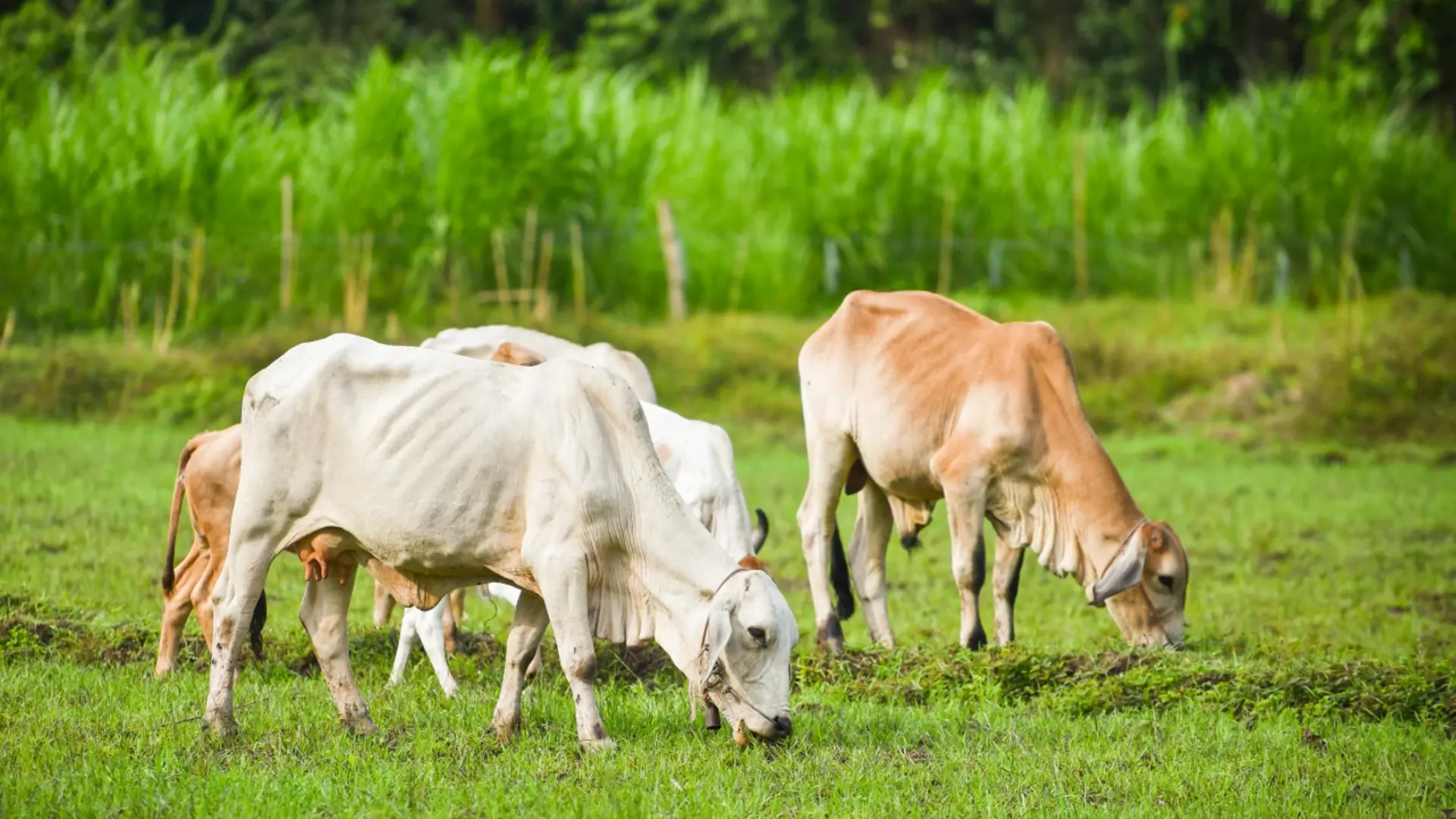
Native cow dung and urine introduce and multiply beneficial microorganisms. - Zero synthetic inputs
No fertilizers, pesticides, or growth boosters—true farmer independence. - Minimal soil disturbance
Protects soil structure, carbon, fungi, and moisture pathways. - Everything returns to the soil
Crop waste, kitchen waste, cow dung—all become fertility.
Remove one pillar, and the system weakens.
How Natural Farming Works in Real Life
Indigenous Cow-Based Inputs
Natural farming relies on three traditional microbial preparations:
- Jeevamrit – a liquid culture that multiplies soil microbes
- Ghanjeevamrit – a solid soil inoculant for long-term fertility
- Beejamrit – natural seed treatment protecting seedlings from disease
These inputs do not feed plants directly.
They feed the soil, which feeds the plant—exactly as nature intended.
At Terragaon Farms, fresh jeevamrit is prepared every 7–10 days during the growing season for maximum microbial activity.
Mulching: The Most Powerful Yet Ignored Practice
Mulching transforms farming almost immediately.
A layer of dry leaves, straw, or crop residue:
- Regulates soil temperature
- Conserves moisture
- Suppresses weeds naturally
- Feeds soil organisms continuously
Bare soil is stressed soil.
Covered soil is productive soil.
At Terragaon, exposed soil is treated as a problem—not a norm.
Zero Tillage: Doing Less, Getting More
Repeated ploughing damages soil more than most farmers realize. It:
- Breaks fungal networks
- Releases stored carbon
- Destroys soil structure
- Activates dormant weed seeds
Natural farming limits disturbance to planting or essential preparation only. Over time, roots grow deeper, water infiltrates better, and soil becomes self-structured.
Natural Pest Management Through Balance
Natural farming does not aim to kill insects—it aims to restore balance.
- Herbal sprays from neem, garlic, chilli repel pests without toxicity
- Mixed cropping attracts beneficial insects
- Healthy plants naturally resist pests
At Terragaon Farms, pest outbreaks have become rare—not because of stronger sprays, but because the ecosystem is stable.
Natural Farming vs Organic vs Conventional Farming
| Aspect | Natural Farming | Organic Farming | Conventional Farming |
|---|---|---|---|
| Synthetic chemicals | No | No | Yes |
| External inputs | None | Often | High |
| Input cost | Very low | Medium–High | Very high |
| Soil disturbance | Minimal | Moderate | High |
| Certification needed | No | Often | No |
| Core focus | Soil biology | Input substitution | Yield maximization |
Organic farming often replaces chemical inputs with purchased organic inputs.
Natural farming removes the dependency altogether.
Terragaon Farms follows Natural + Zero-Waste Farming, where the farm becomes a closed loop.
Real Benefits of Natural Farming
Soil That Improves Every Season
Instead of degrading, soil becomes richer—more organic matter, more life, better structure.
Food That Tastes Real
Naturally grown food develops complex flavours, natural sweetness, and aroma—because nutrient-dense soil produces nutrient-dense crops.
Farming That Makes Financial Sense
By eliminating most inputs, farming costs drop dramatically. Even moderate yields become profitable.
Immediate Environmental Protection
- No groundwater pollution
- Better water retention
- Increased biodiversity
- Improved carbon balance
Ethical Farming
Cows are partners, not machines. Farming regains dignity—for animals and people.
Why Natural Farming Thrives in West Bengal
Birbhum’s red lateritic soil, often dismissed as poor, responds exceptionally well once chemicals are removed.
Combined with:
- Good rainfall patterns
- Warm climate encouraging microbial activity
- Indigenous cattle breeds
- Strong traditional knowledge
West Bengal becomes ideal for natural farming—not because it is new, but because it is remembered.
How We Practice Natural Farming at Terragaon Farms
- Indigenous cows with open access and ethical care
- Fresh jeevamrit prepared regularly
- Soil always covered with mulch
- Minimal tillage
- Diverse mixed cropping
- Zero waste—everything returns to soil
This is not complicated farming.
It is attentive farming.
Can You Start Natural Farming?
Yes—especially if you are:
- A small farmer
- A beginner
- A home gardener
- Someone seeking toxin-free food
You don’t need large land.
You don’t need perfection.
You don’t need expensive tools.
You need patience and observation.
Frequently Asked Questions
What is natural farming in simple terms?
Natural farming means growing food without chemicals by supporting soil life, using natural microbial inputs, mulching, and minimizing disturbance.
Is natural farming profitable in India?
Yes. Lower input costs and better soil health often result in better long-term income, especially for small farmers.
How long does soil take to recover?
Visible improvement often appears within one season; full recovery may take 2–3 years depending on prior chemical use.
Can beginners do natural farming?
Absolutely. Natural farming is often easier for beginners because it removes complex chemical management.
Final Thoughts: Natural Farming Is Forward Thinking
Natural farming is not anti-science.
It is ecology-aligned science.
It represents progress—not by adding more chemicals or machines, but by understanding how soil actually functions.
At Terragaon Farms, we practice natural farming because it creates:
- Healthier land
- Healthier food
- Healthier farmers
Nature already knows how to grow food.
Our role is simply to stop getting in the way.