
When people ask whether natural farming is profitable on small land, they usually expect a simple answer.
Yes or no.
Profit or loss.
But for farmers like Subhash, who cultivates less than half an acre near Bolpur, profitability never looked like a single number. It looked like something else entirely.
Could he farm without borrowing every season?
Could he stop chasing rising input costs?
Could he keep farming without exhausting his soil or himself?
These questions matter more than yield charts.
Why profitability feels different on small land
Small land magnifies reality.
Every rupee spent is felt immediately.
Every mistake shows quickly.
Every improvement becomes visible faster.
In chemical farming, profitability depends on volume. Small land struggles there. Inputs cost almost the same whether you farm one acre or ten, but output does not.
Natural farming shifts this equation.
Instead of increasing income by expanding land or yield, it improves profitability by reducing dependency and stabilizing costs.
For small farmers, this difference is crucial.
What profitability really means in natural farming
Profitability in natural farming on small land does not come from maximum production.
It comes from balance.
Lower input costs.
Stable yields over time.
Reduced risk.
Food security for the household.
Less debt pressure.
When researchers and field practitioners compare chemical farming vs natural farming cost structures in India, a consistent pattern emerges. Even when yields are similar or slightly lower during transition years, net income often improves because expenses drop sharply.
This is especially true for small land holdings.
Where money is actually saved
The biggest financial shift comes from eliminating recurring expenses.
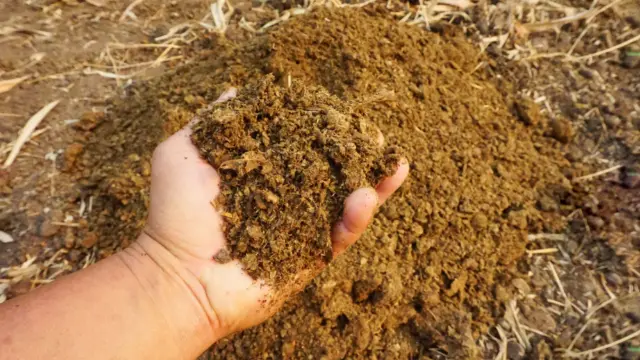
Chemical fertilizers and pesticides are replaced by compost, mulch, and biological processes. Seeds gradually move toward saved or locally adapted varieties. Pest management becomes occasional rather than routine.
On small land, these savings are not abstract. They show up in notebooks and bank balances.
Subhash noticed something important after two seasons. He was no longer calculating how to afford the next input. His biggest costs were now labour and time, both of which he controlled.
Labour and profitability are connected
Critics often say natural farming is labour intensive.
That is partly true at the beginning.
Mulching, composting, observation, and soil care require effort. But this labour replaces paid inputs. Over time, systems stabilize. Weed pressure reduces. Soil holds moisture longer. Crops tolerate stress better.
On small land, this transition happens faster than on large farms. By the second or third season, many farmers report working fewer hours than they did under chemical farming.
Profitability improves not by working more, but by working smarter.
Yield is not the only income factor
Another mistake beginners make is equating profitability only with yield.
Natural farming on small land often produces slightly lower yields in the first one or two seasons, especially if soil was heavily damaged. But crops are healthier, losses are fewer, and household consumption reduces market dependence.
Many small farmers sell surplus produce locally at better prices because customers value chemical-free food, even without formal certification.
Direct sales, local trust, and repeat buyers quietly increase income stability.
Risk reduction is the hidden profit
Natural farming reduces exposure to risk.
Chemical farming ties profitability to market prices of inputs and crops. A bad season or price drop can push small farmers into debt.
Natural farming lowers this vulnerability.
When costs are low and predictable, farmers can survive poor seasons without borrowing. This resilience is a form of profit rarely measured, but deeply felt.
Research backed reality
Studies on low-input and natural farming systems in India consistently show that small and marginal farmers benefit most from reduced external inputs.
Government-supported natural farming programs, including state-level initiatives, emphasize cost reduction and soil health rather than yield maximization. This aligns with field evidence from farmers practicing natural farming on small land across different regions.
Profitability improves gradually, not instantly.
What does not work for profitability
Natural farming on small land fails when expectations are unrealistic.
Trying to match chemical farm yields immediately.
Buying too many organic products.
Ignoring soil recovery time.
Copying methods without adapting locally.
These mistakes recreate dependency and delay profitability.
What actually makes natural farming profitable on small land
Consistent mulching.
Diverse cropping.
Low external inputs.
Seed saving.
Gentle water management.
Patience during transition.
These practices may sound simple, but they align with how soil systems rebuild themselves.
A quiet shift farmers notice
After a few seasons, many small land farmers stop asking whether natural farming is profitable.
They start noticing that farming feels manageable again.
Costs are predictable.
Workload is steady.
Soil improves each year.
Stress reduces.
Profitability becomes sustainable, not seasonal.
Final thoughts
Natural farming profitability on small land is not about becoming rich quickly.
It is about staying in farming without losing control.
At Terragaon Farms, we have seen that when farmers stop chasing short-term gains and start building soil health, profitability follows naturally.
Not loudly.
Not dramatically.
But reliably.
And for small land farmers, reliability is the most valuable profit of all.