Red lateritic soil is often described as difficult, weak, or unsuitable for serious farming. Farmers working on this soil hear the same advice repeatedly. Add more fertilizer. Add more water. Accept lower yield.
In regions like Birbhum, Bankura, Purulia, parts of Jharkhand, Odisha, and eastern Maharashtra, red lateritic soil shapes daily farming decisions. At Terragaon Farms in Birbhum, West Bengal, we work entirely on red lateritic soil. Natural farming here was not a philosophical choice. It was a practical response to soil that could not sustain high input pressure.
This article answers a direct and important question. Is natural farming suitable for red lateritic soil under real Indian conditions.
Understanding red lateritic soil in practical terms
Red lateritic soil is not infertile by default. It is biologically fragile.
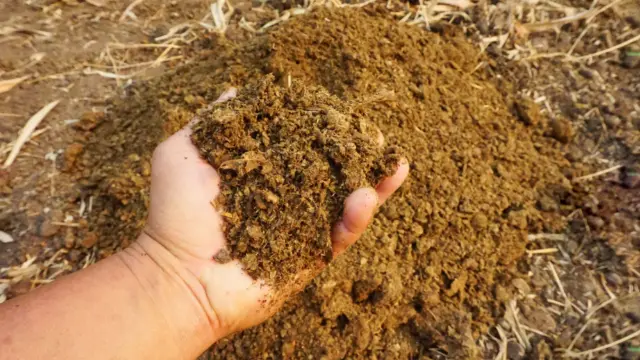
It is typically low in organic matter, weak in nutrient holding capacity, and prone to surface hardening when exposed. Water drains quickly in dry periods and runs off during heavy rain. Without protection, soil temperature rises sharply and microbial life declines.
Most problems associated with lateritic soil are not because of its mineral base, but because of how it is managed.
Why chemical farming struggles on red lateritic soil
Chemical farming intensifies the weaknesses of lateritic soil.
Synthetic fertilizers provide nutrients temporarily but do not improve structure or biological activity. Repeated application accelerates organic matter loss. Pesticides further reduce beneficial organisms.
Frequent tillage exposes soil, increases erosion, and breaks weak aggregates. Over time, soil becomes harder, less responsive, and more dependent on repeated inputs.
This is why yields often stagnate or decline despite increasing fertilizer use.
Why natural farming aligns well with lateritic soil
Natural farming addresses the core limitations of red lateritic soil rather than masking them.
The system focuses on organic cover, biological activity, and reduced disturbance. These directly improve moisture retention, aggregation, and nutrient cycling.
Lateritic soil responds strongly to even small increases in organic matter. Microbial populations rebound quickly when soil is protected from heat and erosion.
In practice, this means that natural farming often shows visible improvement faster on lateritic soil than on heavier soils once correct practices are followed.
Mulching is essential on lateritic soil
Mulching is not optional on red lateritic soil.
Covering the surface with crop residue, dry leaves, straw, or cut weeds protects soil from extreme temperature and prevents rapid moisture loss. It reduces runoff during heavy rain and feeds soil biology continuously.
At Terragaon Farms, consistent mulching transformed soil behavior. Moisture stayed longer. Root development improved. Weed pressure reduced naturally.
Without mulch, lateritic soil degrades quickly regardless of input type.
Reduced tillage protects weak soil structure
Lateritic soil has limited structural strength.
Frequent ploughing breaks aggregates and exposes subsoil. Natural farming limits tillage to essential operations and avoids repeated disturbance.
Over time, roots and microbial activity rebuild structure naturally. Soil becomes easier to work, not harder.
This shift takes patience, but it is fundamental to long term productivity.
Organic matter matters more than nutrients
On red lateritic soil, adding nutrients without organic matter rarely works.
Natural farming prioritizes organic matter through mulch, compost, crop residues, and root biomass. This improves nutrient holding capacity and reduces leaching.
Indigenous microbial inputs, where available, support biological activity but only work effectively when organic matter is present.
Lateritic soil does not respond to force. It responds to care.
Crop selection under natural farming on lateritic soil
Crop choice strongly influences success.
Short duration crops, millets, pulses, oilseeds, and locally adapted vegetables perform better during transition. Deep rooted crops improve structure and water infiltration.
High input crops struggle unless soil biology and moisture retention improve first.
Natural farming encourages matching crops to soil condition rather than forcing soil to suit crops.
Water management improves with biology
Lateritic soil is sensitive to both drought and heavy rain.
Natural farming improves infiltration during rainfall and reduces evaporation during dry periods. Mulched soil absorbs water instead of shedding it.
Over time, irrigation frequency reduces even though soil remains moist longer. This change is gradual but reliable.
Common mistakes farmers make on lateritic soil
Applying more fertilizer instead of improving organic matter delays recovery. Leaving soil bare accelerates degradation. Expecting quick yield increase leads to disappointment.
Natural farming on lateritic soil works when farmers accept that soil rebuilding comes before yield improvement.
Realistic expectations for lateritic soil recovery
Visible improvement often appears within one year if soil is protected consistently.
Full stabilization takes two to three seasons depending on prior chemical intensity, rainfall pattern, and crop choice.
The direction of change is more important than speed.
Final thoughts
Is natural farming suitable for red lateritic soil. Yes, when practiced correctly.
In fact, red lateritic soil often responds better to natural farming than to chemical systems because its limitations are biological, not permanent.
At Terragaon Farms, lateritic soil stopped behaving like a constraint once it was protected, fed gently, and disturbed less. It began functioning again.
For farmers working on red lateritic soil, natural farming is not a compromise. It is often the most realistic path to stability.
SEO and Discover Data for This Article
Primary Keyword
is natural farming suitable for red lateritic soil
Secondary Keywords
natural farming red lateritic soil
laterite soil natural farming India
red soil natural farming
Long Tail Keywords
can natural farming work on lateritic soil
natural farming in red soil areas
lateritic soil farming methods India

Krittika Das is a field practitioner and primary author at Terragaon Farms in Birbhum, West Bengal. Her writing is grounded in daily farm work, long-term soil observation, and small-land realities of eastern India. She focuses on natural farming, soil ecology, ethical dairy, and low-input systems, translating field experience into clear, practical knowledge for farmers and conscious food consumers.