When people ask whether soil really changes, they usually expect laboratory numbers. At Terragaon Farms in Birbhum, West Bengal, the first evidence did not come from reports. It came from how the soil behaved under our feet, in our hands, and around plant roots.
This is a field level account of what our soil looked like before and after two years of consistent change. Not a success story told in numbers, but an observation of how soil responds when stress is reduced and biology is allowed to return.
What the soil looked like before the transition
Before any change, the soil surface hardened quickly after rain. Within a day or two, it formed a crust that cracked under sun. Water pooled briefly and then ran off. When dry, the soil turned powdery at the top and dense underneath.
Roots stayed shallow. Pulling out plants showed short, brownish roots clustered near the surface. Earthworms were absent. Even after good rainfall, the soil dried fast and required frequent irrigation.
The soil did not smell alive. After rain, there was no earthy scent, only the smell of wet mineral soil. Cultivation felt heavy. Each season required effort just to keep crops standing.
At that time, yields were not disastrous, but the soil clearly demanded constant intervention.
What changes we introduced and what we stopped doing
The most important change was not adding something new. It was stopping certain practices.
We stopped leaving soil bare. Mulch became continuous, not seasonal. Crop residues stayed on the field instead of being removed. Soil disturbance was reduced to what was strictly necessary for planting.
We did not eliminate all inputs overnight. We focused on protection first. Moisture stability, shade, and reduced heat stress became priorities.
Biological stimulants were introduced later, not at the beginning, once soil conditions became less hostile.
What changed in the first few months
Within weeks, soil temperature dropped under mulch. Moisture stayed longer below the surface even during dry spells. The soil did not crack as sharply after drying.
Roots began exploring slightly deeper layers. Weed species shifted. Instead of aggressive surface weeds, softer vegetation appeared.
There was still no dramatic softness, but stress behavior changed. Soil stopped deteriorating further. That alone was progress.
What changed after one full season
After one season, the soil surface stopped sealing after moderate rain. Water infiltration became quieter. Instead of puddles, rain disappeared into the ground.
When soil was handled, it held shape briefly and broke apart naturally. Aggregates were fragile but present. Fine dust reduced noticeably.
A faint earthy smell appeared after rain. Earthworms were still rare, but small channels began appearing.
The soil was not rich yet, but it was responsive.
What the soil looked like after two years
After two years of consistent protection and reduced disturbance, the difference became unmistakable.
The soil surface remained friable even after heavy rain followed by sun. Crust formation reduced significantly. Moisture stayed longer without irrigation.
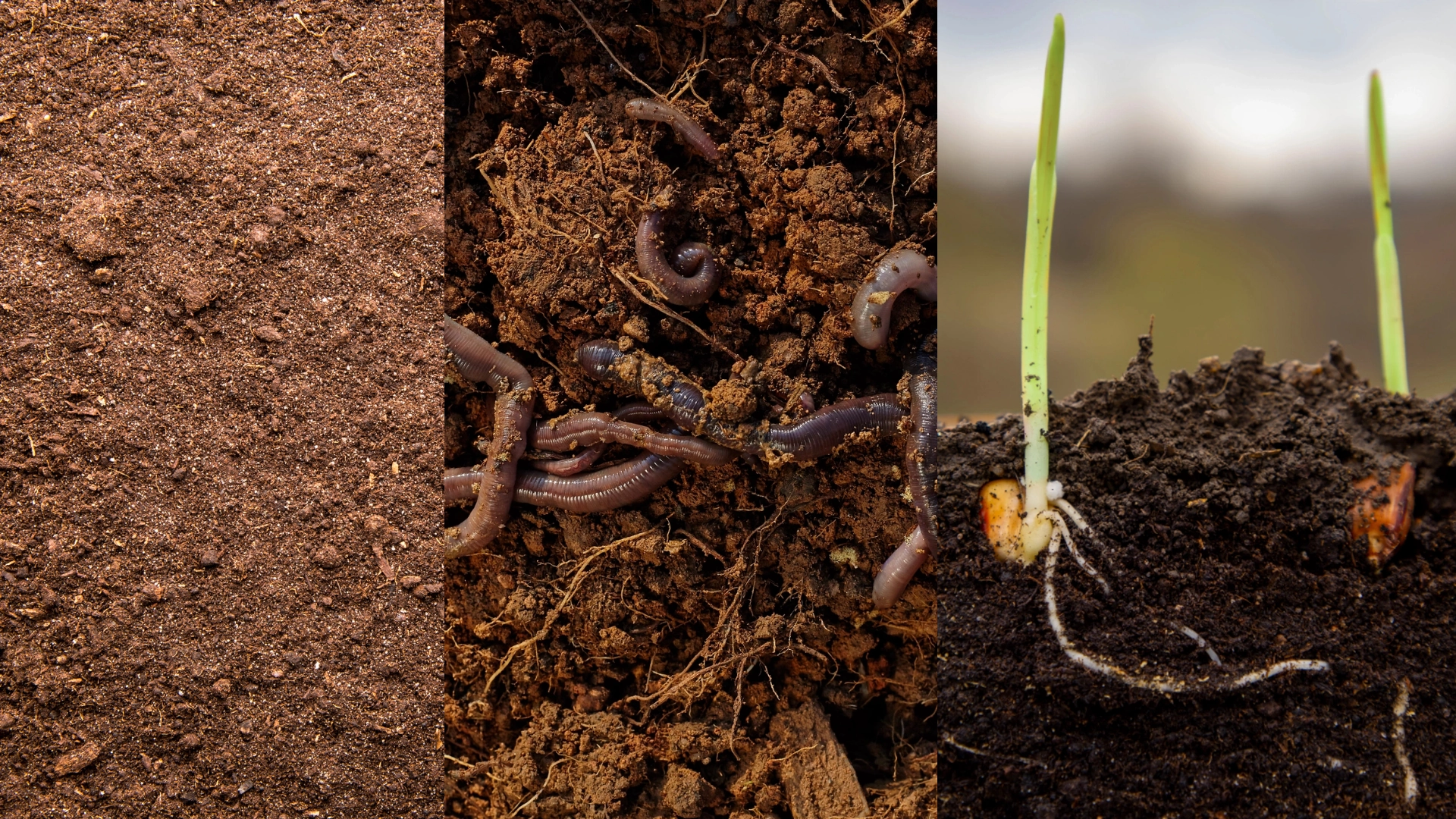
Roots penetrated deeper and spread wider. Pulling plants showed white, healthy root systems instead of stressed surface clusters.
Earthworms returned gradually. First one or two after rain, then burrows, then visible castings. Soil began to smell alive again.
The soil no longer collapsed under pressure. It absorbed water, resisted compaction, and supported crops with less intervention.
This change happened before any major yield jump. Soil behavior changed first. Crops followed.
What did not change quickly
Organic matter numbers did not rise dramatically within two years. That was expected.
Stable organic matter builds slowly. The visible changes came from improved aggregation, biological activity, and moisture regulation, not from large carbon accumulation.
This is important because many farmers abandon good practices when lab values do not change fast enough.
Why these changes mattered more than yield alone
Yield can fluctuate due to weather and markets. Soil behaviour reflects system health.
Once soil began holding moisture and resisting stress, farming became more predictable. Irrigation reduced. Labour became manageable. Crops tolerated dry spells better.
The farm felt calmer. Emergencies reduced. That stability mattered more than short term output.
What this experience taught us about soil recovery
Soil recovery is not about inputs. It is about conditions.
When soil is protected from heat, drying, and disturbance, biology returns. Aggregation follows. Function improves. Numbers catch up later.
Trying to force improvement through products without addressing stress leads to disappointment.
How farmers can observe similar change on their land
Farmers do not need two years of patience to see early signs.
Watch how soil responds to rain. Check how long moisture stays below the surface. Observe root depth. Notice soil smell after rain. Look for earthworm activity.
These indicators reveal direction long before reports do.
Final thoughts
What our soil looked like after two years was not perfect. It was alive, responsive, and resilient.
The most important lesson was simple. Soil does not need to be pushed to improve. It needs space to recover.
At Terragaon Farms, soil changed when we stopped treating it as a surface to manage and started treating it as a living system to protect. That shift changed everything else that followed.
For Indian farmers, soil recovery is not a promise. It is a process that shows itself quietly to those who observe carefully.

Krittika Das is a field practitioner and primary author at Terragaon Farms in Birbhum, West Bengal. Her writing is grounded in daily farm work, long-term soil observation, and small-land realities of eastern India. She focuses on natural farming, soil ecology, ethical dairy, and low-input systems, translating field experience into clear, practical knowledge for farmers and conscious food consumers.