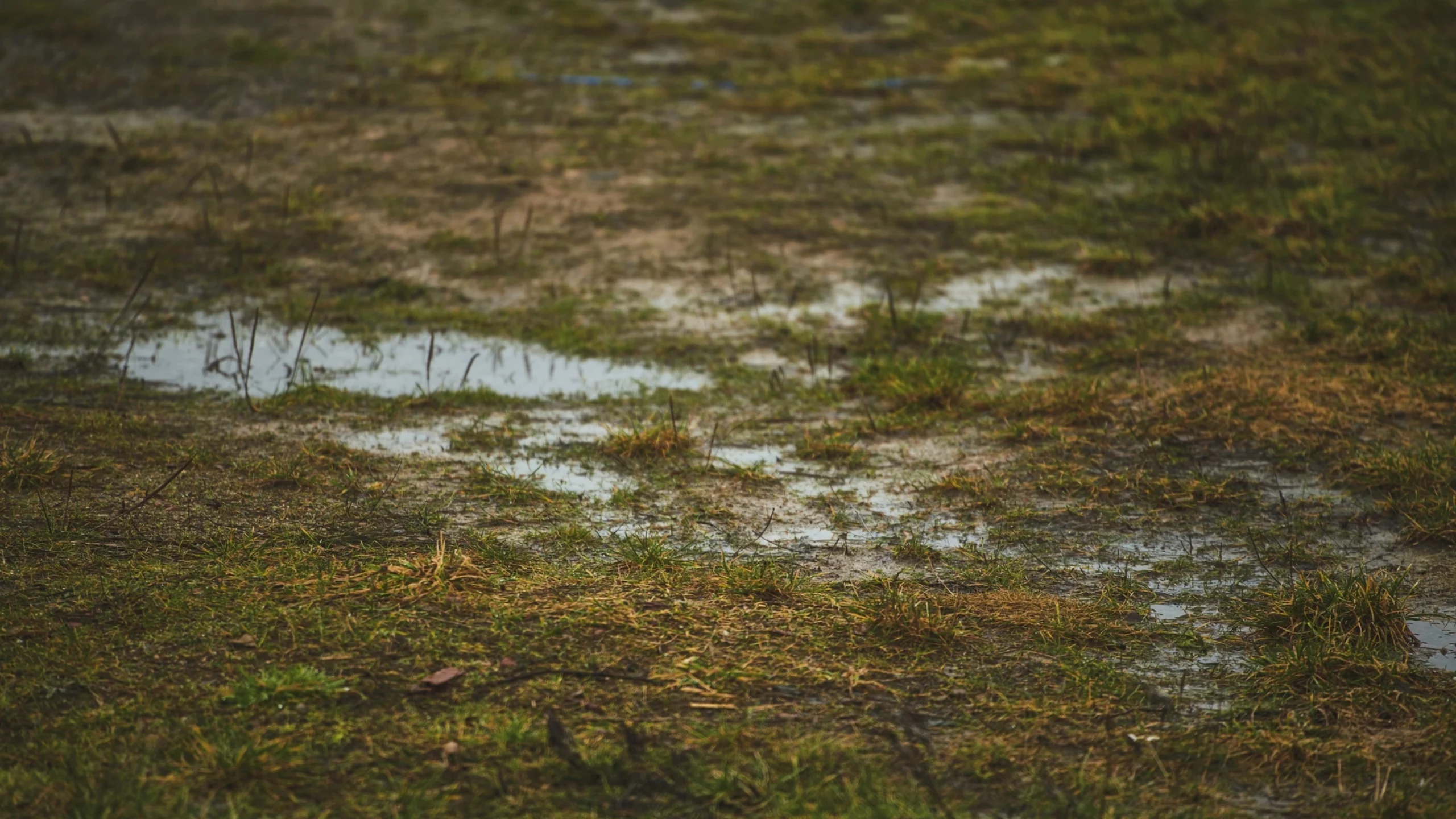
Farmers across red and lateritic regions often describe the same frustration. The field looks moist after rain, but within a day or two the surface turns hard like brick. Roots struggle. Seedlings fail. Water runs off instead of soaking in. This problem appears repeatedly in parts of West Bengal, Jharkhand, Odisha, and similar landscapes.
At Terragaon Farms in Birbhum, West Bengal, this behavior was one of the earliest signs that soil health had declined long before yields dropped. Understanding why soil becomes hard after rain in red and lateritic areas requires looking at biology and structure, not nutrients alone.
What red and lateritic soils are made of
Red and lateritic soils are rich in iron and aluminum oxides. These minerals give soil its color and also influence how particles bind together.
When organic matter and biological activity are healthy, these soils can form stable aggregates. When organic matter declines, the same minerals cause particles to disperse and seal tightly under rain impact.
This dual nature is why lateritic soil can be productive under good management and extremely difficult under stress.
The real cause: surface sealing after rainfall
The hard crust farmers see is not compaction from machinery. It is surface sealing.
When rain hits bare soil, fine particles detach and move slightly downward. As water drains or evaporates, these particles settle and form a dense, thin layer at the surface. Once dry, this layer hardens.
Surface sealing blocks air exchange, reduces infiltration, and prevents young roots from emerging. Even light rainfall after sealing causes runoff instead of absorption.
This process accelerates in red soils when organic matter is low.
Why organic matter loss makes the problem worse
Organic matter acts as glue in soil. It binds particles into aggregates that resist rain impact.
When organic matter declines, aggregates break easily. Rainfall then separates fine particles, which move freely and seal the surface.
Fertilizer use does not prevent this. Nutrients do not rebuild aggregation. Without carbon and biology, soil structure collapses under rainfall stress.
This is why soils can receive fertilizer regularly and still become harder each season.
Aggregation failure and biological decline
Healthy aggregation depends on microbes, roots, and organic residues.
Fungal networks bind particles together. Bacterial secretions stabilize micro aggregates. Roots create channels that allow water entry.
When soil is repeatedly tilled, left bare, or overheated, these biological agents decline. Aggregation fails. Rainfall then reorganizes soil particles into a sealed layer.
Hard soil after rain is a symptom of biological collapse, not mineral deficiency.
The role of bare soil exposure
Bare soil is the biggest trigger for surface sealing in lateritic regions.
Strong sun dries and weakens aggregates. When rain follows, soil particles disperse easily. Without residue cover, nothing absorbs rain energy before it hits the soil surface.
This cycle repeats across seasons. Each year, sealing becomes stronger and recovery slower.
This explains why farmers notice the problem worsening even when cultivation practices remain unchanged.
Why ploughing often increases hardness later
Ploughing temporarily loosens soil. For a short time, fields feel soft.
However, ploughing breaks existing aggregates and exposes fresh surfaces to oxidation. When rain follows, these disturbed particles seal even more tightly.
This is why soil often feels softer immediately after ploughing but harder a few days after rain.
Repeated tillage creates short term comfort and long term damage.
How this affects roots and crops
Surface sealing restricts oxygen movement. Roots remain shallow. Seedlings fail to emerge or emerge weak.
Water infiltrates slowly, increasing runoff and erosion. Nutrients move unevenly. Crops show stress even when moisture appears adequate.
Farmers often respond with more irrigation or fertilizer, which does not solve the structural problem.
What actually reduces soil hardness after rain
The solution lies in protecting and rebuilding structure.
Continuous soil cover through mulch reduces rain impact. Organic residues cushion the surface and slow particle movement.
Living roots for more months of the year feed microbes that rebuild aggregation. Reduced disturbance allows fungal networks to recover.
Over time, soil begins to absorb water instead of sealing. The surface remains friable even after heavy rain.
At Terragaon Farms, visible improvement came when soil stayed covered through monsoon and tillage was minimized. Hard crust formation reduced before yields changed.
Why compost alone is not enough
Compost adds organic matter but does not protect the surface unless combined with cover.
When compost is applied and soil remains bare, sealing still occurs. The environment remains hostile to biology.
This is why compost works best when soil is already protected by mulch or crop cover.
How farmers can observe improvement
Improvement shows first in water behavior. Rain infiltrates quietly. The surface remains crumbly after drying.
Roots penetrate deeper. Earthworms reappear. Weed species soften.
These signs appear before any lab test reflects change.
Final thoughts
Soil becoming hard after rain in red and lateritic areas is not a mystery. It is a physical and biological response to organic matter loss, aggregation failure, and surface exposure.
Fertilizer cannot prevent this. Ploughing hides it briefly. Only protection and biological rebuilding solve it.
At Terragaon Farms, this problem reduced only when soil was treated as a living surface rather than a substrate to be worked. Once sealing stopped, farming became easier, not harder.
For farmers working on red soils, softness after rain is not luck. It is the result of how soil is treated between crops.

Krittika Das is a field practitioner and primary author at Terragaon Farms in Birbhum, West Bengal. Her writing is grounded in daily farm work, long-term soil observation, and small-land realities of eastern India. She focuses on natural farming, soil ecology, ethical dairy, and low-input systems, translating field experience into clear, practical knowledge for farmers and conscious food consumers.