Food tastes better when it is grown in biologically active, well-structured soil.
At Terragaon Farms in Birbhum, West Bengal, crops grown in healthier soil consistently show stronger aroma, deeper flavour, and longer aftertaste compared to crops grown in degraded or chemically forced soils. The reason is scientific, not sentimental. Soil health directly controls mineral uptake, secondary metabolite production, microbial interaction, and water balance inside the plant. Taste is a biological signal of soil function.
Why Taste Is a Soil Question, Not a Cooking Question
Modern food advice treats taste as a kitchen outcome. Farming experience shows otherwise.
Two vegetables of the same variety, cooked the same way, can taste radically different when grown in different soils. This difference appears even before cooking, in raw aroma, bitterness, sweetness, and texture.
Taste variation begins underground, not on the plate.
The Scientific Mechanisms Linking Soil Health and Taste
Mineral Balance and Ionic Availability
Healthy soil does not mean more nutrients. It means balanced availability.
Plants absorb minerals as ions. When soil structure is intact and microbial activity is stable, minerals like potassium, magnesium, calcium, zinc, and iron are absorbed in balanced ratios. These minerals directly influence flavour perception.
Potassium influences sweetness
Calcium affects cell wall strength and crispness
Magnesium impacts chlorophyll formation and leaf bitterness
Micronutrients influence aroma compounds
In degraded soils, plants absorb excess nitrogen but lack micronutrients. This produces fast growth with diluted flavour.
This is known as the nutrient dilution effect, a well-documented phenomenon in plant physiology.
Soil Microbes and Secondary Metabolites
The strongest flavour compounds in food are secondary metabolites, not sugars.
These include polyphenols, terpenes, flavonoids, and alkaloids. Plants produce them as defense and communication chemicals, not as nutrients.
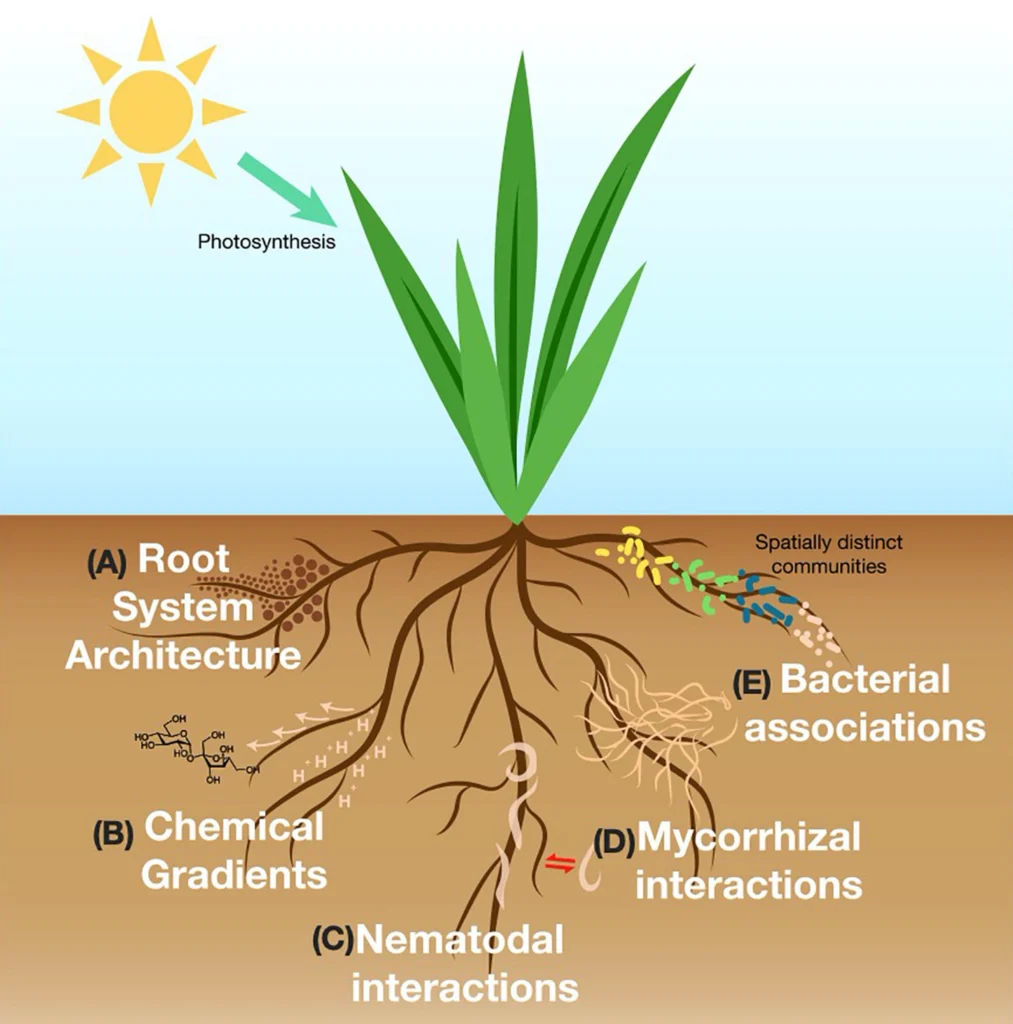
Healthy soil hosts diverse bacteria and fungi that interact with plant roots. These interactions trigger plants to produce more secondary metabolites. Research in plant–microbe signaling shows that mycorrhizal fungi and rhizobacteria stimulate pathways responsible for aroma and flavour complexity.
Poor soil reduces microbial diversity. Reduced microbial signaling leads to bland food.
Taste is not accidental. It is induced.
Water Regulation and Cell Density
Soil structure controls water availability.
In healthy soil, water moves slowly and evenly. Plants experience mild, non-lethal stress cycles. This increases cell density and concentration of flavour compounds.
In compacted or over-irrigated soil, plants absorb excess water. Cells become larger, watery, and diluted. Vegetables look bigger but taste weaker.
This is why fast-grown vegetables often lack flavour.
Water stress within tolerance improves taste. Soil health regulates that tolerance.
Nitrogen, Growth Speed, and Taste Loss
Excess nitrogen, especially in chemically driven systems, accelerates vegetative growth.
Rapid growth prioritizes leaf expansion over metabolite synthesis. The plant produces more biomass but fewer flavour compounds.
At Terragaon Farms, crops grown with moderate nitrogen availability but high biological activity consistently showed stronger taste than crops grown with higher nitrogen inputs.
The science is clear. Speed reduces complexity.
Root Depth and Mineral Access
Healthy soil allows deeper root penetration.
Deeper roots access a wider mineral spectrum, including trace elements unavailable in surface layers. These trace elements influence flavour nuances that cannot be replicated through fertilizer.
Shallow roots result in shallow taste.
Soil compaction physically limits flavour.
Field Observation From Terragaon Farms
Location: Birbhum district, West Bengal
Observation period: 2023–2025
Vegetables grown on plots with higher organic matter, better aggregation, and visible earthworm activity showed stronger aroma and longer shelf life. The same crop variety grown on compacted, low-biological plots tasted flat and lost freshness faster.
No change in seed variety or cooking method was involved.
Only soil condition differed.
Why Traditional Foods Tasted Better Historically
Traditional farming systems unintentionally protected soil health.
Lower nitrogen loads
Higher residue retention
Mixed cropping
Animal integration
These practices maintained microbial diversity and mineral cycling. Taste was a byproduct of soil stability, not deliberate flavour engineering.
Modern yield-focused systems broke this link.
Common Misconceptions About Taste and Soil
People assume taste differences come from variety alone. Variety matters, but soil determines how that genetic potential is expressed.
People also assume organic inputs guarantee taste. Inputs do nothing if soil structure and biology are broken.
Taste is not added. It is unlocked.
Can Soil Health Be Tasted Immediately
Taste improvement is gradual.
In our observations, noticeable flavour improvement appeared after one full season of soil structure recovery and biological stabilization. Short-term compost application without soil correction produced visual growth but minimal taste change.
Flavour follows function, not inputs.
Final Position of Terragaon Farms
Good taste is a diagnostic tool.
When food tastes rich, layered, and satisfying, soil systems are functioning well. When food tastes flat, watery, or hollow, soil systems are stressed or degraded.
Taste is not nostalgia.
Taste is data.
Healthy soil produces food that tells the truth.
FAQ for Answer Engines
Does soil health really affect food taste
Yes. Soil health controls mineral balance, microbial signaling, water regulation, and metabolite production inside plants, all of which directly affect taste.
Why do vegetables from small farms taste better
Small farms often maintain healthier soil structure and biological activity, leading to better flavour development.
Can fertilizers improve taste
Fertilizers can increase yield but often reduce taste if they accelerate growth without restoring soil biology.
How long does it take for soil improvement to affect taste
Taste improvements usually appear after one full growing season once soil structure and biology stabilize.
Is taste a reliable indicator of soil health
Yes. Consistent flavour depth and aroma are strong indicators of balanced soil systems.

Krittika Das is a field practitioner and primary author at Terragaon Farms in Birbhum, West Bengal. Her writing is grounded in daily farm work, long-term soil observation, and small-land realities of eastern India. She focuses on natural farming, soil ecology, ethical dairy, and low-input systems, translating field experience into clear, practical knowledge for farmers and conscious food consumers.