
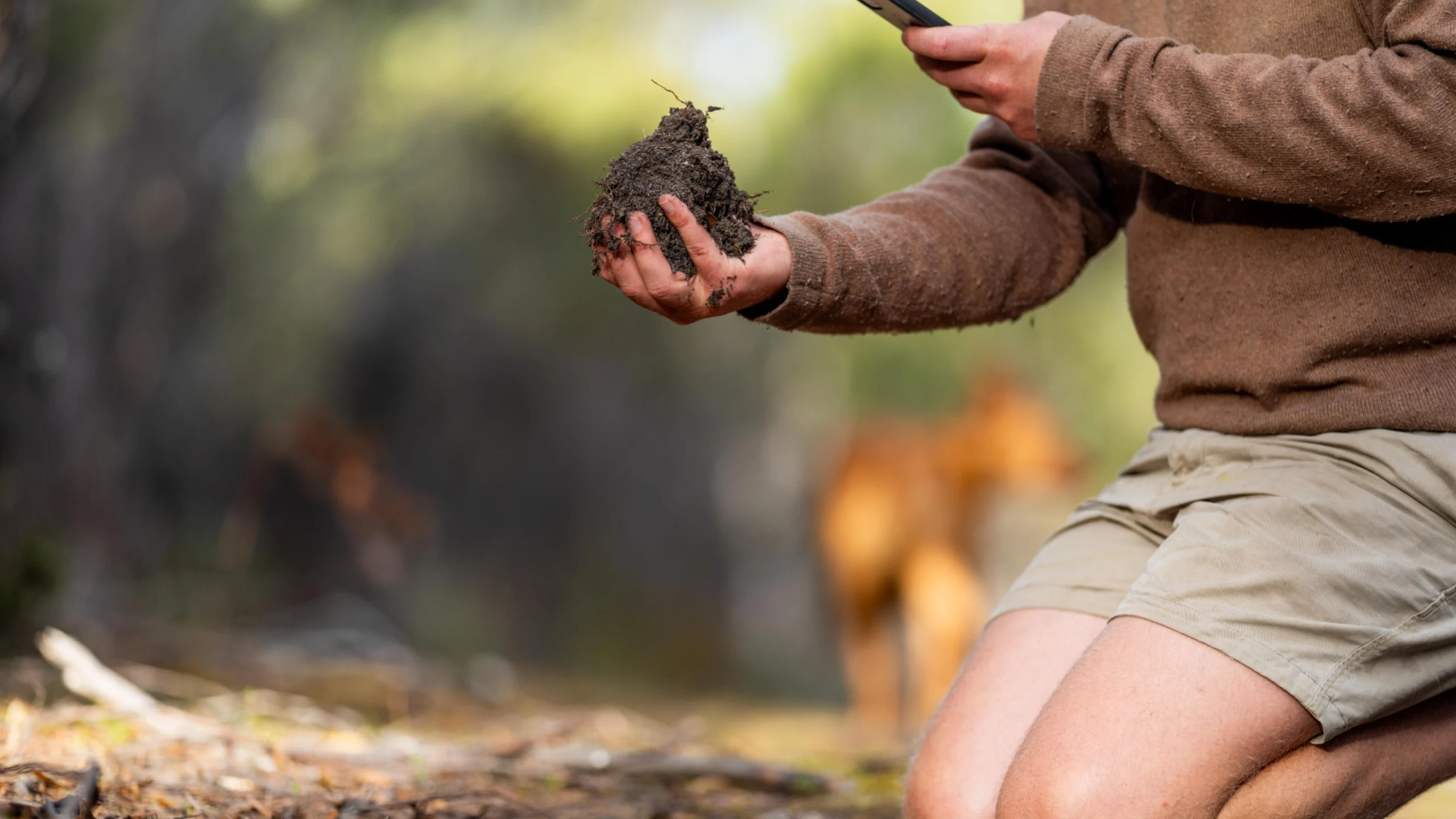
Most Indian farmers hear the word microbes today. It appears in fertilizer ads, natural farming talks, and soil health discussions. Yet for many, microbes remain invisible actors spoken about in complicated language. When things are not understood clearly, they are either ignored or blindly trusted.
At Terragaon Farms in Birbhum, West Bengal, our understanding of soil microbes did not come from textbooks or diagrams. It came from watching how soil behaved when farming practices changed. Soil that once hardened began to crumble. Water stayed longer. Roots grew deeper. Earthworms returned. These changes were not magic. They were microbial activity becoming visible.
This article explains soil microbes in simple, practical terms for Indian farmers, using field behavior rather than scientific jargon.
What soil microbes really are in farming terms
Soil microbes are living workers in the soil. They are not fertilizers. They are not inputs you buy. They are organisms that already exist in the soil when conditions allow them to survive.
Think of microbes as helpers that unlock nutrients already present in soil and organic matter. When they are active, crops feed themselves more efficiently. When they are absent, no amount of fertilizer works fully.
Healthy soil does not depend on one type of microbe. It depends on balance.
Bacteria explained through what farmers observe
Bacteria are the fastest workers in the soil.
In farming terms, bacteria respond quickly when fresh organic matter or moisture is available. When crop residues decompose rapidly or when soil smells earthy after rain, bacteria are active.
Bacteria help release nutrients like nitrogen in forms plants can absorb. This is why soils with active bacteria often show quick crop response even without heavy fertilizer use.
However, bacteria also disappear quickly when soil dries, overheats, or is disturbed repeatedly. Fields that are ploughed often or left bare lose bacterial activity first.
Farmers notice this when soil becomes dusty and crops need frequent feeding.
Fungi explained through soil structure and roots
Fungi work slowly but deeply.
They help bind soil particles together into stable aggregates. When soil holds shape but breaks easily in the hand, fungi are doing their job.
Fungi also form networks that extend the reach of plant roots. This is why crops grown in undisturbed soil often access moisture and nutrients from deeper layers.
Farmers see fungal activity when roots spread widely and crops tolerate dry spells better.
Excessive tillage damages these networks. This is why repeated ploughing weakens soil even when nutrients are present.
Actinomycetes explained through soil smell
Actinomycetes are a special group of microbes that give healthy soil its characteristic earthy smell after rain.
When farmers notice this smell returning after years of chemical use, it signals recovery. These microbes help break down tougher organic materials and contribute to stable organic matter.
Their presence usually means soil is moving toward balance rather than rapid but unstable fertility.
Why microbes disappear from Indian soils
Microbes do not vanish because farmers lack effort. They disappear when conditions become hostile.
Strong sun on bare soil kills surface microbes. Excessive drying between irrigations reduces survival. Repeated tillage destroys habitat. High salt fertilizers stress microbial life. Crop residues removed year after year starve them.
This is why fertilizer use alone cannot maintain microbial populations. Nutrients without habitat do not sustain life.
How farmers unknowingly support microbes
Farmers often support microbes without realizing it.
Leaving residues on the field, even partially, protects soil. Mulching reduces heat and moisture stress. Reducing tillage allows fungal networks to rebuild. Diverse crops feed diverse microbes.
These actions matter more than adding microbial products from outside.
At Terragaon Farms, microbial activity increased not when we added new inputs, but when we removed practices that were harming soil life.
What microbial activity looks like on the farm
Farmers do not need microscopes.
Microbial activity shows itself as soil that absorbs water instead of repelling it. As roots that grow white and healthy. As earthworms returning. As weeds changing character. As crops showing resilience rather than just rapid growth.
These signs often appear before yields increase.
Common misunderstandings about soil microbes
Many believe microbes need to be purchased regularly. In reality, most soils already contain microbes waiting for better conditions.
Others expect instant results. Microbial recovery takes time because it depends on carbon flow and habitat stability.
Some think microbes replace nutrients entirely. Microbes help cycle nutrients, but crops still require balanced nutrition.
Understanding limits prevents disappointment.
How microbes fit into natural farming systems
Natural farming works because it focuses on creating conditions where microbes thrive.
Mulching, minimal disturbance, continuous roots, and organic inputs support microbial life naturally. Preparations like jeevamrut stimulate activity, but only when basic conditions are right.
This is why microbial solutions fail when soil remains exposed and stressed.
Final thoughts
Soil microbes are not mysterious. They reveal themselves through soil behavior long before lab tests change.
For Indian farmers, understanding microbes means learning to observe soil responses rather than memorizing scientific terms.
At Terragaon Farms, soil health improved when we stopped asking how to add microbes and started asking how to stop harming them. When soil life returned, farming became more stable and predictable.
Healthy soil is not silent. It shows its life to those who watch carefully.

Krittika Das is a field practitioner and primary author at Terragaon Farms in Birbhum, West Bengal. Her writing is grounded in daily farm work, long-term soil observation, and small-land realities of eastern India. She focuses on natural farming, soil ecology, ethical dairy, and low-input systems, translating field experience into clear, practical knowledge for farmers and conscious food consumers.