
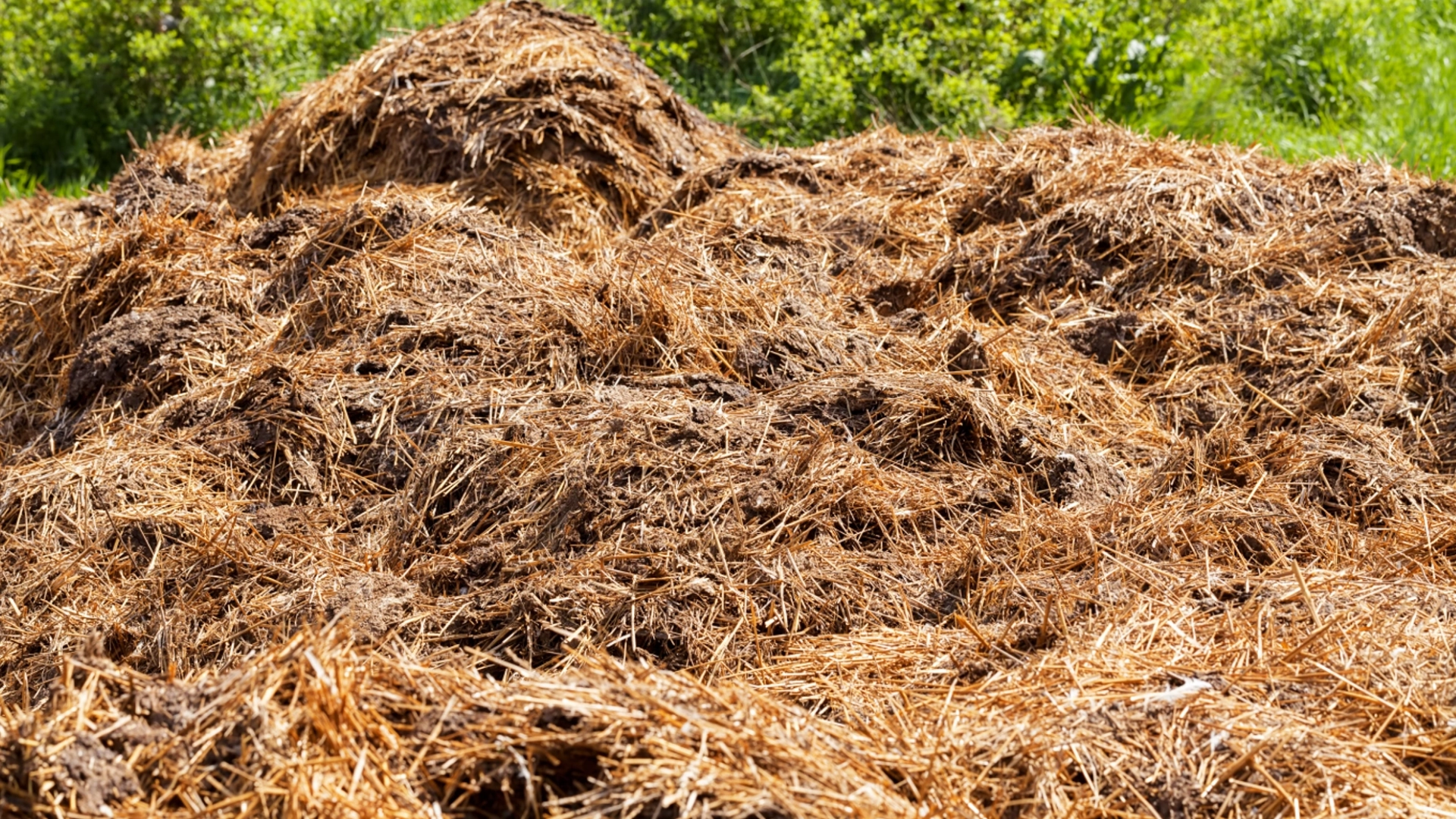
At Terragaon Farms in Birbhum, zero waste farming is not an environmental slogan. It is an economic survival model. It does not mean producing no garbage. It means designing a farm system where the idea of waste no longer exists because every byproduct is structurally reused inside the farm boundary. Zero waste farming replaces the linear model of buy inputs, grow crops, sell produce, discard residue with a closed-loop economic system where nutrients, water, energy, and money circulate internally for as long as possible. In lateritic, low-margin conditions like Birbhum, notes from field data and current agro-ecological research confirm that closed-loop systems are the only consistently profitable pathway for smallholders facing rising input costs and stagnant crop prices.
Why Zero Waste Is an Economic Necessity in Birbhum
Lateritic soils, erratic monsoons, and high summer temperatures create constant leakage in conventional farming systems. Nutrients volatilise, water evaporates, and residues are burned. Each loss forces the farmer to purchase replacements. Research from tropical agro-ecosystems consistently shows that farms with higher internal nutrient recycling have lower cost volatility and better yield stability under climatic stress.
Zero waste farming focuses on one principle: stop the leaks.
If something leaves the farm gate, it must leave as a finished product sold for profit. If it stays inside, it must be reintegrated into the production cycle to create value.
The Leak-Proof Farm Concept
Conventional farming behaves like a bucket with holes. Fertilisers wash away, water runs off, residues are burned, and money leaks out. A zero waste farm behaves like a sealed container. Energy, nutrients, and moisture are slowed, reused, and biologically transformed rather than lost.
This approach aligns with circular bioeconomy research, which shows that farms retaining organic residues and livestock integration recognise 20–40 percent lower external input dependence over time.
The Three Critical Loops of a Zero Waste Farm
A zero waste system fails if even one loop remains open. All three must function together.
The Biological Loop: Soil Plant Animal Continuum
This loop is the metabolic engine of the farm.
Soil feeds plants. Plants feed animals. Animals feed soil.
At Terragaon Farms, paddy straw and pulse residues are never burned. They are harvested and stored as roughage for indigenous cows. These cows convert low-digestibility cellulose into biologically active dung and urine. That waste enters a biogas system, producing methane for household energy and nutrient-dense bioslurry that returns to the fields.
Biological Loop Data Per Acre Per Year (2025 Cycle)
| Parameter | Observed Value |
|---|---|
| Crop residue harvested | 4.5 tonnes |
| Roughage supplied | 60 percent of two adult cows |
| Fresh dung generated | Approx. 10 tonnes |
| Chemical fertiliser replaced | ~110 kg urea equivalent, ~250 kg SSP, ~90 kg MOP |
Current soil fertility research confirms that biogas slurry delivers nitrogen in ammoniacal form with higher plant uptake efficiency and improves soil microbial biomass compared to raw manure.
The Water Loop: Every Drop Used Twice
Water scarcity in Birbhum is not due to low rainfall alone but due to runoff and evaporation losses.
Zero waste farming treats water as a recyclable input, not a single-use resource.
Rainwater is slowed using contour swales and percolation structures, forcing infiltration into subsoil layers. Greywater from household use is routed into banana circles filled with organic matter. These act as biological filters, breaking down soaps and organic load while producing banana, papaya, and colocasia.
Studies on constructed wetlands and biological filtration systems show that such setups reduce biological oxygen demand and convert wastewater into productive biomass with minimal health risk when managed correctly.
The Economic Loop: Reducing Cash Dependency
The ultimate objective of zero waste farming is not ideological purity. It is cash flow stability.
By replacing purchased fertilisers, pesticides, fodder, and fuel with internally generated alternatives, the cost of cultivation drops sharply.
Economic Impact on One Acre of Paddy (Terragaon Farms)
| Input Category | Conventional Model 2022 | Zero Waste Model 2025 | Cash Reduction |
|---|---|---|---|
| Synthetic fertilisers | ₹9,500 | ₹0 | 100% |
| Plant protection | ₹4,800 | ₹750 | 84% |
| Livestock feed | ₹14,000 | ₹4,200 | 70% |
| Total cash inputs | ₹28,300 | ₹4,950 | 82.5% |
These numbers reflect cash expenditure only. Labour input increases significantly. However, economic research on smallholder systems recognises this as a shift from cash dependency to sweat equity, which improves resilience where family labour is available.
Ground Reality Trade-Offs
Zero waste farming is not easier. It is more demanding.
Labour demand increases due to biomass handling, compost management, and livestock care. Knowledge demand increases because biological systems require timing, balance, and observation. Transition periods can show yield dips during the first one to two seasons as soil biology stabilises.
These constraints are well documented in agroecological transition studies across South Asia.
Failure Log: When the Loop Breaks
The Citrus Compost Failure (Winter 2023)
A large quantity of citrus waste was added directly to an active vermicompost pit. Citrus peels contain d-limonene, which is toxic to earthworms at high concentrations. Within forty-eight hours, mass worm mortality occurred, and composting stalled.
The lesson was precise. Biodegradable does not mean universally compostable. Waste streams must be matched to the correct biological processor. Citrus waste is now fed in controlled quantities to the biogas system, where anaerobic digestion neutralises its toxicity.
Why Zero Waste Is a Direction, Not a Destination

No farm reaches absolute zero waste. The value lies in approaching it.
Every sack of fertiliser not purchased, every litre of water reused, and every kilogram of residue not burned strengthens sovereignty. Research on resilient farming systems consistently shows that internal cycling buffers farms against climate shocks better than yield-maximisation strategies.
In Birbhum’s climate, resilience is profit.
Final Position of Terragaon Farms
Zero waste farming is not about saving the planet first. It is about saving the farmer.
A closed-loop economic model reduces dependency, stabilises costs, and converts vulnerability into control. In lateritic regions, this is not optional innovation. It is structural necessity.
Frequently Asked Questions (FAQs)
What does zero waste farming actually mean
It means designing a farm where byproducts are reused internally instead of discarded.
Is zero waste farming profitable
Yes, when labour is available and systems are well managed, cash costs reduce significantly.
Does zero waste farming eliminate fertilisers
It eliminates purchased fertilisers by replacing them with internal nutrient cycles.
Is it suitable for small farms
Yes, small farms benefit most because they rely more on labour than capital.
How long does transition take
Typically one to two years before biological systems stabilize.
Next Step
Field Action: Conduct a “Waste Audit” of your farm this week. Identify one major byproduct you are currently burning, burying, or ignoring (e.g., vegetable crop residue, animal bedding, kitchen scraps).

Krittika Das is a field practitioner and primary author at Terragaon Farms in Birbhum, West Bengal. Her writing is grounded in daily farm work, long-term soil observation, and small-land realities of eastern India. She focuses on natural farming, soil ecology, ethical dairy, and low-input systems, translating field experience into clear, practical knowledge for farmers and conscious food consumers.